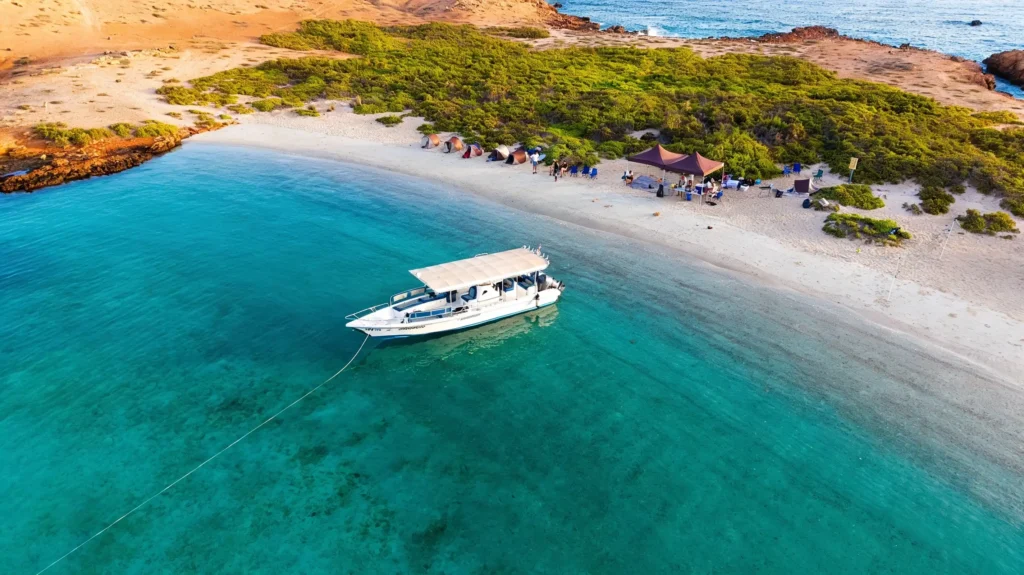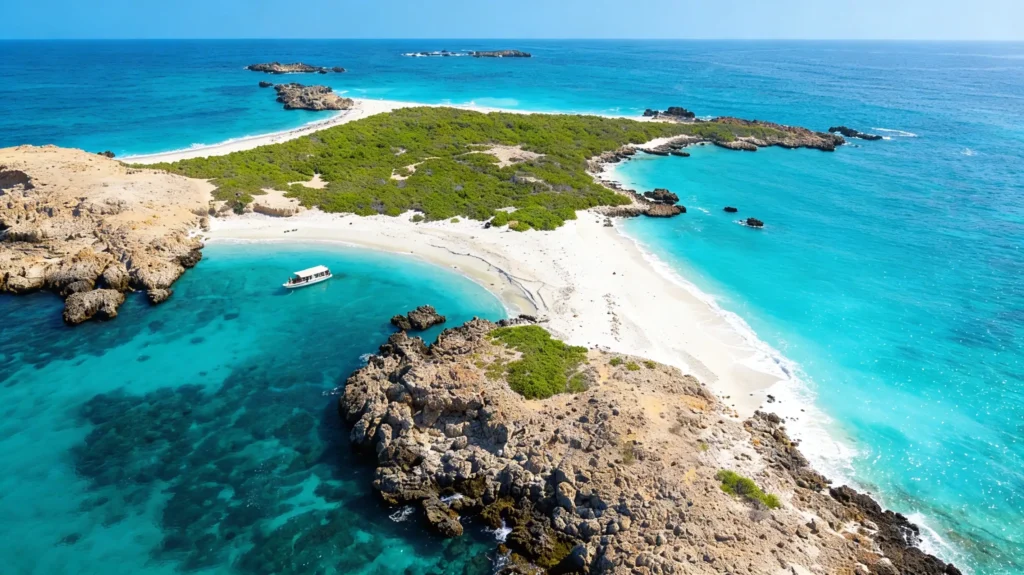
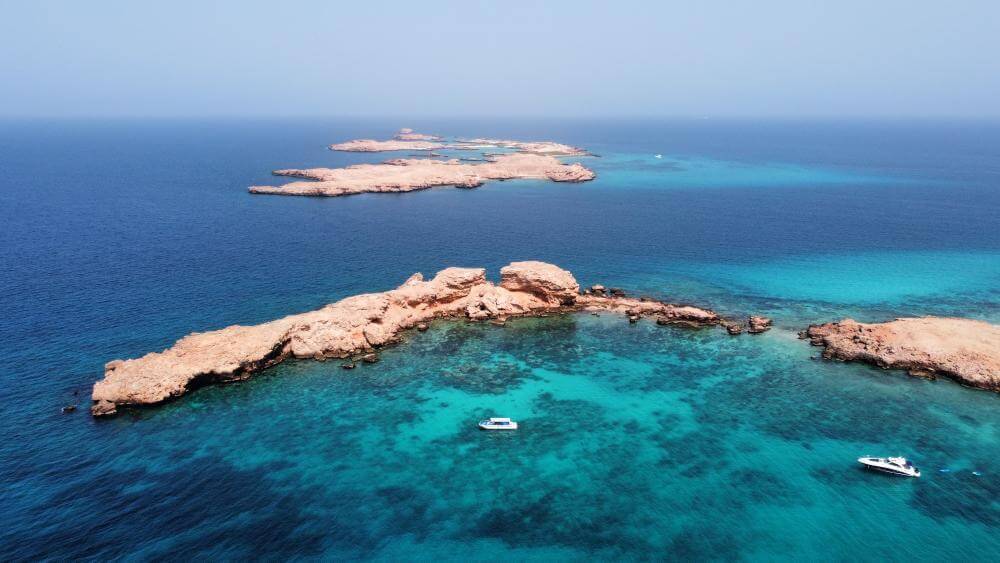
There’s a stretch of the Gulf of Oman, roughly 18 kilometers off the coast of Barka, where the water turns a shade of turquoise so vivid it almost looks digitally enhanced. Nine uninhabited islands rise from the sea, surrounded by coral reefs that have been growing undisturbed for centuries.
This is Al-Daymaniyat Islands Nature Reserve, and if you haven’t heard of it yet, you’re about to understand why marine conservationists, divers, and eco-travelers are calling it one of the most important protected marine ecosystems in the entire Arabian Peninsula.
The Al-Daymaniyat Islands aren’t just beautiful. They’re scientifically significant, ecologically rare, and formally recognized on UNESCO’s Tentative World Heritage List, a designation that places them alongside some of the planet’s most irreplaceable natural wonders. So what exactly earns this remote Omani archipelago that level of global recognition? Let’s dive in literally and figuratively.
A Quick Geographic Overview: Nine Islands, One Extraordinary Ecosystem
The Al-Daymaniyat archipelago consists of nine small, uninhabited islands spread across a protected stretch of the Gulf of Oman. The islands sit within the Al Batinah South Governorate, accessible by a 40–45 minute speedboat ride from Muscat or Al-Seeb.
What makes their location so ecologically unique is the combination of shallow, nutrient-rich waters, clean, unpolluted seabed, and the archipelago’s position along key marine migration routes. These conditions have created a self-sustaining marine habitat that is genuinely difficult to replicate and nearly impossible to restore once damaged.
The islands are dominated by limestone formations, distinctive coastal cliffs, and wide sandy beaches. On land, around 15 species of wild plants cover parts of the larger islands. But the real story here is underwater.
Oman’s First and Only Marine Nature Reserve
On April 3, 1996, the Omani government issued a Royal Decree designating Al-Daymaniyat Islands as a protected Nature Reserve, the first and, to this day, the only dedicated marine nature reserve in the entire Sultanate of Oman.
That distinction matters enormously. It means every coral colony, every sea turtle nest, every migratory bird that lands on these islands is legally protected under national law. The Oman Environment Authority (EA) manages the reserve with a team of trained rangers, patrol boats, and a strict permit system that controls exactly who enters and when.
Until 2013, the islands were entirely off-limits to recreational visitors, accessible only to marine researchers and conservationists conducting field studies. That 17-year exclusivity is a big part of why the marine ecosystem here remains so intact. The reefs weren’t trampled by mass tourism during their most vulnerable decades. They were left alone to thrive.
This conservation-first philosophy is precisely what UNESCO recognized when the al Dimaniyyat Islands were placed on Oman’s Tentative World Heritage List.
The UNESCO Connection: What Criterion X Means for This Reserve
UNESCO evaluates natural sites against a set of criteria. Al-Daymaniyat Islands were assessed against Criterion X, which applies to sites that “contain the most important and significant natural habitats for in-situ conservation of biological diversity, including those containing threatened species of outstanding universal value.”
That’s an extraordinarily high bar, and the islands clear it comfortably.
According to UNESCO’s own assessment documentation, the reserve:
- Provides critical nesting habitat for two globally endangered sea turtle species
- Supports internationally significant breeding colonies of multiple seabird species
- Contains extensive, relatively undamaged coral reef ecosystems
- Functions as a migration corridor for marine mammals, including whale sharks and dolphins
The formal UNESCO language notes that the reserve “meets criterion X as it encompasses natural habitats vital for the survival of large numbers of birds, two species of turtles, and various species of coral reefs and associated reef fishes.”
Being on the Tentative List is the essential first step toward full World Heritage inscription. It signals that the site has been formally evaluated and found worthy of nomination, no small achievement in a region not typically associated with marine conservation leadership.
The Marine Biodiversity That Makes Scientists Take Notice
Coral Reefs: 20+ Species in Pristine Condition
The underwater geography of Al-Daymaniyat is extraordinary. Visibility in the water can reach up to 30 meters, particularly in the winter months, offering a window into coral formations that have developed in clean, largely undisturbed conditions.
More than 20 species of hard and soft coral have been documented across the reserve. The northeastern bay of the main island hosts the most dramatic reef structures, with dense coral gardens rising from a sandy bottom. Because the substrate is unpolluted and the water clarity is exceptional, coral growth here is notably more robust than at many comparable sites across the Arabian Sea.
The reef system supports a cascading web of marine life from microscopic invertebrates to apex predators, all in ecological balance.
Sea Turtles: A Global Sanctuary in Miniature
This might be the most emotionally compelling reason Al-Daymaniyat deserves UNESCO-class protection. Every summer, the islands serve as one of the most significant hawksbill sea turtle nesting sites in the Arabian region.
Between 250 and 300 hawksbill turtles (Eretmochelys imbricata) nest annually on the sandy beaches of the islands. Green turtles (Chelonia mydas) are also present, feeding in the shallow seagrass beds on the southwestern side.
Both species are classified as globally endangered. The fact that hundreds of individuals reliably return to Al-Daymaniyat each year is a powerful indicator of ecosystem health. Sea turtles are sensitive to human disturbance, pollution, and habitat degradation. Their continued presence here is essentially a vote of confidence in the reserve’s management.
To protect nesting activity, the islands are completely closed to visitors from May 1 through October 31 each year. No landings, no snorkeling, no boats within sensitive zones. This isn’t just a suggestion — rangers actively patrol and violations carry legal penalties.
Birds: A Panoramic Breeding Colony
When thousands of seabirds descend on Al-Daymaniyat during the breeding season, witnesses describe it as a breathtaking natural spectacle. The reserve functions as an international center for migratory and endemic bird species, hosting colonies that nest on the north-facing limestone cliffs.
Documented breeding species include:
- Red-billed Tropicbird (Phaethon aethereus)
- Osprey (Pandion haliaetus) — the only known nesting site for this species in the region
- Roseate Tern (Sterna dougallii)
- White-cheeked Tern (Sterna repressa)
- Bridled Tern (Sterna anaethetus)
- Sooty Tern (Sterna fuscata)
- Common Noddy (Anous stolidus)
The osprey population is particularly notable. Al-Daymaniyat is cited as the only confirmed nesting location for ospreys in Oman, making the reserve irreplaceable for regional ornithology.
Marine Mammals and Other Notable Species
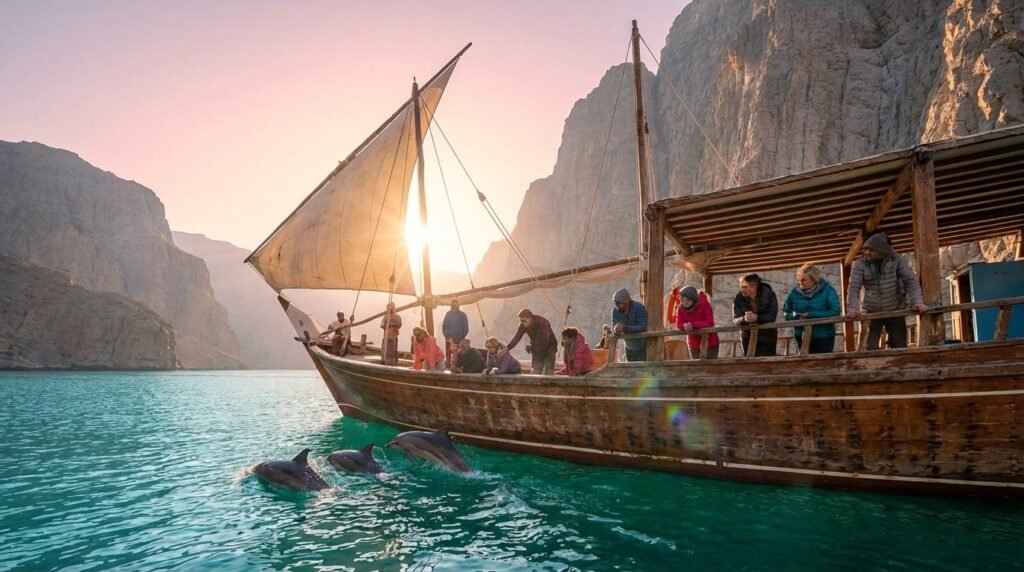
The waters around the archipelago support bottlenose dolphins, common dolphins, spinner dolphins, and humpback whales. Whale sharks, the world’s largest fish, pass through these waters seasonally, and lucky visitors on boat transfers have spotted them en route to the islands.
The reserve also harbors two species of pearl mussel (Pinctada radiata and P. margaritifera), spiny lobster, moray eels, blacktip reef sharks, rays, and a dazzling array of reef fish. Terrestrial and marine snakes have also been recorded on and around the islands.
How the Reserve Is Actually Managed
Strong legal protection on paper means little without enforcement on the ground. The Oman Environment Authority has established a management framework that is genuinely functional rather than symbolic.
Four trained rangers are permanently stationed at the reserve, equipped with patrol boats, monitoring equipment, and legal authority to intercept violations. A temporary ranger office on the main island supports research activities and visitor control.
Regular coral cleaning campaigns are conducted with participation from stakeholders across government and civil society. Monthly beach cleaning operations ensure debris is removed before it can harm wildlife.
The permit system means every visitor is logged, tracked, and briefed on behavioral guidelines before arrival. Tour operators must be authorized, and independent boat access requires a separate government permit. This keeps visitor numbers manageable and ensures that the people who do visit understand how to behave responsibly.
Visiting Al-Daymaniyat Islands: What Travelers Need to Know
When to Visit
The islands are open to visitors from November 1 through April 30. This winter season aligns with cooler temperatures, calmer seas, and exceptional underwater visibility, often 20–30 meters. It’s also when ospreys nest on the clifftops, adding a wildlife dimension above the waterline.
Summer (May–October) is strictly off-limits due to turtle nesting. There are no exceptions.
How to Get There
There is no public ferry or independent access option. All visits must be arranged through authorized tour operators, most of whom depart from Al Mouj Marina in Muscat or from harbors near Al-Seeb and Barka. The boat journey takes approximately 40–45 minutes each way.
Group day tours start from around 15 OMR per person for shared trips. Private tours are also available at higher rates. Most half-day packages include snorkeling equipment, a light lunch, and water.
What to Expect
- Snorkeling is the most popular activity. The northeastern bay is the best spot for coral and reef fish; the southwestern seagrass beds are where you’re most likely to encounter turtles.
- Scuba diving is available through certified operators and caters to all skill levels from beginner to advanced.
- Kayaking and boat tours allow you to explore the islands’ coastline without entering the water.
Camping is permitted during the open season (November–April) with appropriate permits.
Pros and Cons of Visiting Al-Daymaniyat Islands
|
Pros |
Cons |
|
Exceptional marine biodiversity |
Closed May–October (sea turtle season) |
|
High water visibility (up to 30m) |
No independent access — tour required |
|
Uncrowded even during peak season |
Limited open season window |
|
Strong conservation management |
The weather can affect sea conditions |
|
Hawksbill turtle and dolphin encounters |
Costs can add up for private tours |
|
UNESCO Tentative World Heritage Site |
No permanent facilities on islands |
|
Only 40–45 min from Muscat |
The permit system requires planning |
Practical Travel Tips
- Book in advance. Authorized tour spots fill up quickly during the November–April season, especially around Omani public holidays.
- Go on a weekday. Even during peak season, the islands see far fewer visitors than comparable destinations. A weekday visit virtually guarantees a quiet experience.
- Bring reef-safe sunscreen. Chemical sunscreens damage coral. Many operators require reef-safe products, and it’s simply the right thing to do in a protected marine reserve.
- Bring a dry bag. Some of the best beaches are only reachable by a short swim from the boat. A dry bag protects your phone and camera.
- Respect the ropes and buoys. Boundary markers indicate areas where anchoring, snorkeling, or landing is restricted. These exist for ecological reasons; follow them without question.
- Don’t touch the coral or turtles. It’s illegal within the reserve and causes genuine harm. Observe from a respectful distance.
- Dress appropriately at departure points. Swimwear is fine on the boat and in the water, but modest clothing is expected at marinas and departure harbors.
Al-Daymaniyat vs. Other Gulf Marine Destinations
|
Feature |
Al-Daymaniyat, Oman |
Musandam Fjords, Oman |
Sir Bani Yas, UAE |
|
UNESCO Status |
Tentative List |
No |
No |
|
Turtle Nesting |
Yes (250–300/year) |
Limited |
Limited |
|
Coral Health |
Excellent |
Good |
Moderate |
|
Crowds |
Very Low |
Moderate |
Moderate-High |
|
Access |
Permit/Tour |
Tour |
Tour |
|
Whale Sharks |
Seasonal |
Rare |
Rare |
|
Open Year-Round |
No (Nov–Apr) |
Yes |
Yes |
The verdict is clear: for raw ecological significance and low-impact, high-quality marine experiences, Al-Daymaniyat stands in a category of its own within the Gulf region.
FAQ: Al-Daymaniyat Islands Marine Reserve
Are the Al-Daymaniyat Islands a UNESCO World Heritage Site?
Not yet officially, but they are on UNESCO’s Tentative World Heritage List, which is the formal precursor to full inscription. The site was assessed and found to meet UNESCO’s Criterion X for outstanding biodiversity value, recognizing it as globally significant for turtle conservation, seabird colonies, and coral reef ecosystems.
When is the best time to visit Al-Daymaniyat Islands?
The islands are open to visitors from November 1 through April 30 only. The best months are November through February, when water visibility is at its clearest (up to 30 meters), seas are calm, and temperatures are comfortable both on and off the water.
Can you visit Al-Daymaniyat Islands independently?
No. Access requires either booking an authorized tour operator or obtaining a government permit if bringing a private vessel. Independent access without a permit is prohibited and actively enforced by reserve rangers.
What marine life can you see at Al-Daymaniyat Islands?
Visitors regularly encounter hawksbill and green sea turtles, a huge variety of reef fish, blacktip reef sharks, moray eels, rays, and dolphins. Whale sharks are occasionally spotted during boat transfers. Over 20 coral species form the reef structure, supporting exceptionally high fish diversity.
Why are the Al-Daymaniyat Islands closed from May to October?
The islands are closed during this period to protect nesting sea turtles. Between 250 and 300 endangered hawksbill turtles nest on the beaches annually during the summer months. Human disturbance during nesting can cause females to abandon their eggs, making the seasonal closure critical to the species’ survival in the region.
How far are the Al-Daymaniyat Islands from Muscat?
The islands are approximately 18 kilometers off the coast of Barka, which is about 40–45 minutes by speedboat from Al Mouj Marina in Muscat. Most authorized tour operators depart from this marina or from harbors near Al-Seeb.
Final Verdict: Why Al-Daymaniyat Islands Deserve to Be on Every Traveler’s Radar
There’s a particular kind of travel experience that stays with you not because it was glamorous or Instagram-perfect, but because it felt genuinely important. Al-Daymaniyat Islands are that kind of place.
This isn’t a destination that has been packaged and polished for mass tourism. It’s a functioning, active conservation zone where endangered turtles nest in the hundreds, ospreys raise chicks on clifftops, and coral reefs grow in waters so clear you can read the species names off your dive slate. The fact that you can visit at all and swim alongside hawksbill turtles in their actual wild habitat is a privilege that comes with real responsibility.
UNESCO’s decision to place Al-Daymaniyat on the Tentative World Heritage List isn’t bureaucratic box-ticking. It’s a formal acknowledgment that this place matters to the entire planet, not just to Oman, not just to divers, but to the long-term health of marine ecosystems in a region of the world where unspoiled nature is increasingly rare.
If you’re planning a trip to Oman, a half-day or full-day tour to Al-Daymaniyat Islands shouldn’t be an optional add-on. It should be the anchor around which your itinerary is built.
Planning a Daymaniyat Islands trip?
Browse our current snorkelling, diving and private boat trips, or message our team if you have a question about your travel dates.