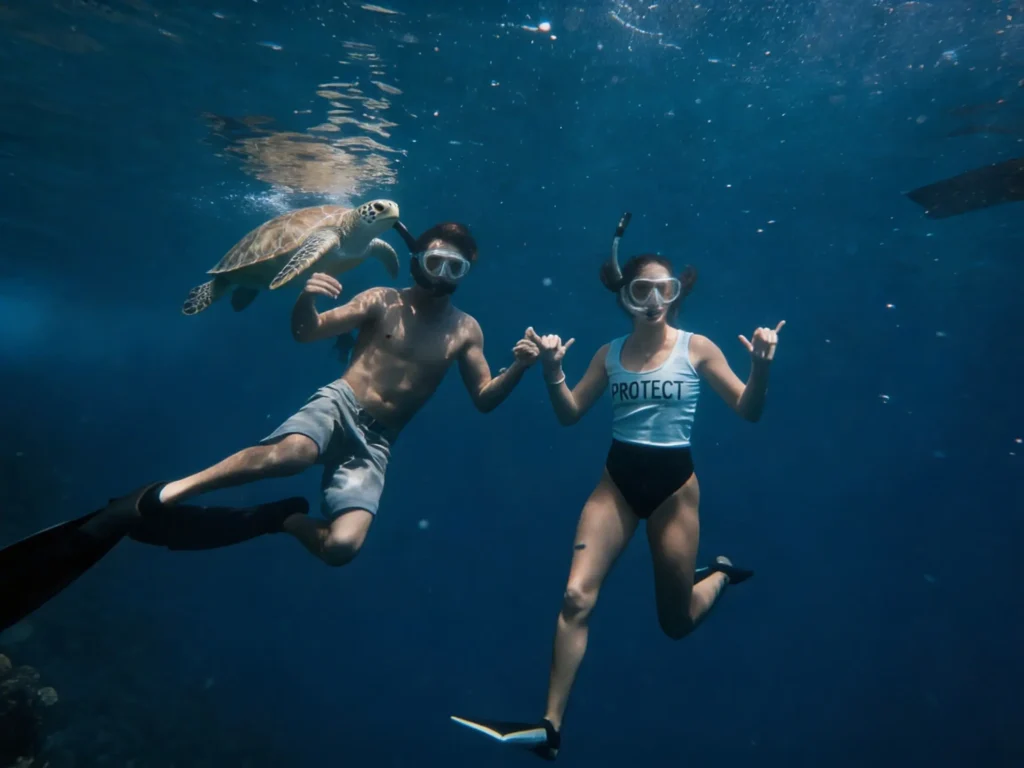
Picture this: you slip beneath the surface of the Arabian Sea, and within seconds, a sea turtle glides past you completely unbothered, feeding lazily on algae just a few feet away. That’s the Daymaniyat Islands for you.
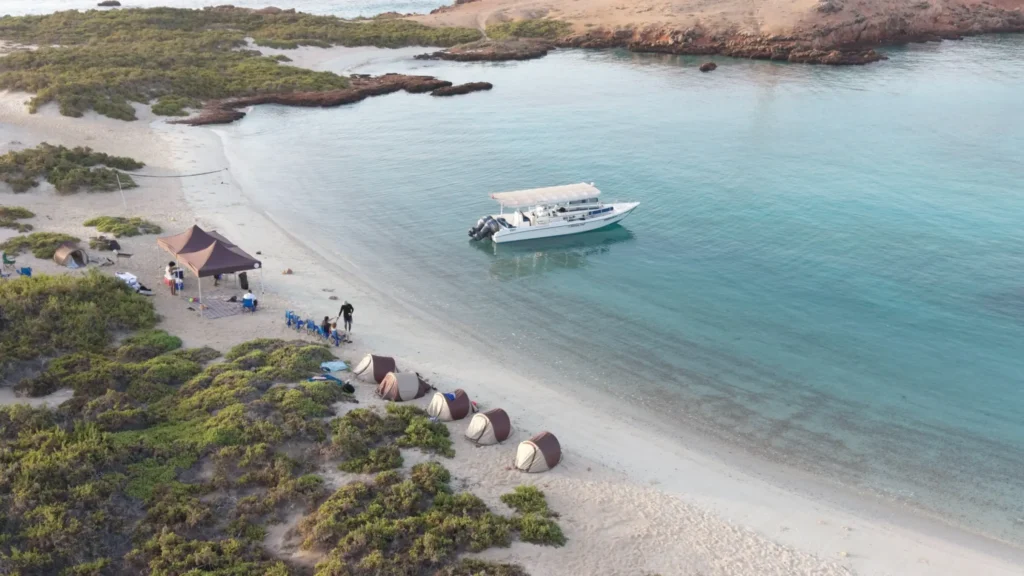
Located about 70 km northwest of Muscat, the Daymaniyat Islands are Oman’s only marine nature reserve and one of the most biologically rich snorkeling and diving destinations in the entire Middle East. Designated as a protected nature reserve in 1996 and listed on UNESCO’s tentative World Heritage list, this archipelago of nine uninhabited limestone islands is home to over 280 species of fish, more than 100 types of coral, and some of the ocean’s most majestic megafauna.
Whether you’re a seasoned diver or a first-time snorkeler who’s never worn fins in your life, the marine life at Daymaniyat Islands will leave you stunned. This guide breaks down the top 10 marine species you can realistically expect to encounter, when to see them, where to look, and exactly what makes each one so special.
Why the Daymaniyat Islands Are a Marine Biodiversity Hotspot
Before we dive into the species list, it’s worth understanding why Daymaniyat’s underwater world is so exceptional.
The islands sit at the convergence of nutrient-rich upwellings from the Arabian Sea, which feed thriving coral ecosystems year-round. Coral reefs cover up to 70% of the dive sites, with healthy formations of both hard and soft coral at depths ranging from just 2 meters to 30 meters. Around 10% of the coral species found here are believed to be endemic to Oman’s waters; you won’t find them anywhere else on Earth.
Strict regulations also play a huge role. Access to the reserve requires a permit; tour operators are vetted and authorized, and the islands are completely closed to landing between May and October each year to protect nesting turtles. This level of conservation means the marine life is genuinely wild, abundant, and unbothered by human activity, unlike what you’d see at more overcrowded dive destinations.
The result? An underwater world that genuinely feels untouched.
Top 10 Marine Species at Daymaniyat Islands
1. Green Sea Turtle (Chelonia mydas)
Best time to see them: Year-round. Where: Turtle City (shallow sheltered bay), seagrass beds
If there’s one creature that defines the Daymaniyat Islands experience, it’s the green sea turtle. They are everywhere. At the famous snorkeling spot known locally as “Turtle City,” it is not unusual to count 40 or more turtles at any given time stacked on top of each other, grazing on algae, and gliding effortlessly through the crystal-clear shallows.
Green turtles are the larger of the two turtle species found here. They can grow up to 1.5 meters in length and weigh as much as 200 kg, yet they move through the water with quiet, unhurried grace. Because they feed on seagrass and algae near the bottom, snorkelers can observe them at very close range without needing to dive deep at all.
Unlike many turtle encounters around the world, where you might spot one or two briefly before they dart away, the turtles at Daymaniyat are wonderfully docile, likely because they’ve grown accustomed to respectful snorkelers. Just remember: do not touch them. Approaching quietly and calmly will always reward you with a longer, more magical encounter.
2. Hawksbill Sea Turtle (Eretmochelys imbricata)
Best time to see them: Year-round (nesting season: May–October) Where: Coral reef edges, rocky ledges
The hawksbill turtle is the Daymaniyat Islands’ conservation crown jewel. Incredibly, the islands are recognized as one of the world’s densest nesting grounds for this critically endangered species, with 250–300 hawksbills nesting annually on the sandy beaches.
You can distinguish hawksbills from green turtles by their narrower, pointed beak (shaped rather like a hawk’s bill, hence the name) and their distinctly patterned, overlapping shell plates. While green turtles are grazers, hawksbills are reef specialists. You’ll often find them nosing around coral crevices in search of sponges and invertebrates.
Spotting a hawksbill on a dive is a genuinely special experience. They tend to be slightly more elusive than green turtles, but patient snorkelers who drift quietly along the reef edge have a very good chance of an encounter. The fact that these animals are critically endangered worldwide makes every sighting at Daymaniyat feel all the more precious.
3. Whale Shark (Rhincodon typus)
Best time to see them: June–October (peak: August–September) Where: Open water around and between the islands
The whale shark is the holy grail of any Daymaniyat Islands visit. The largest fish on Earth, reaching lengths of up to 12 meters, these gentle filter feeders pass through Omani waters during the warmer summer months, drawn by the nutrient-rich upwellings of the Arabian Sea.
Despite their colossal size, whale sharks pose absolutely no threat to snorkelers. They feed entirely on plankton and small baitfish by filtering enormous volumes of water through their cavernous mouths. Swimming alongside one is often described by travelers as one of the most profound wildlife experiences of their lives, a slow-motion encounter with a creature that feels almost otherworldly in scale.
|
Whale Shark Fast Facts |
|
|
Average length |
8–12 meters |
|
Diet |
Plankton, krill, small fish |
|
Conservation status |
Endangered (IUCN) |
|
Best viewing season |
July–October in Oman |
|
Behavior near snorkelers |
Calm, slow-moving, non-aggressive |
Morning departures from Muscat offer the best odds of a whale shark encounter, as tour operators often spot them on the boat ride out to the islands. Even if you miss peak season by a few weeks, the turtles and reef sharks alone make the trip more than worthwhile.
4. Blacktip Reef Shark (Carcharhinus melanopterus)
Best time to see them: Year-round Where: Sandy channels between coral formations, shallower reef sections
If whale sharks are the headline act, blacktip reef sharks are the scene-stealers. These slender, elegantly patterned sharks are a regular fixture at Daymaniyat, typically seen cruising low along sandy channels between coral formations. Their distinctive black-tipped fins make them easy to identify, even from the surface.
Don’t let the word “shark” intimidate you. Blacktip reef sharks are shy, non-aggressive, and far more interested in the reef fish around them than in snorkelers. In fact, most encounters involve the shark noticing you and casually swimming away. They tend to keep close to the seabed, which means you’ll often need to dive down slightly to get a proper look though experienced snorkelers regularly see them from the surface too.
Daymaniyat is one of the most reliable places in the Middle East to see blacktips in the wild, making this a major draw for underwater photographers and wildlife enthusiasts.
5. Leopard Shark / Zebra Shark (Stegostoma tigrinum)
Best time to see them: Year-round Where: Sandy seabeds, reef base
Often spotted resting motionless on the sandy floor of the reef, the leopard (or zebra) shark is one of Daymaniyat’s most photographed residents. These bottom-dwelling sharks have distinctly elongated tails, spotted skin patterns, and a wonderfully relaxed demeanor. They’re frequently found just lying still on the sand, seemingly unbothered by the world above.
Leopard sharks are harmless to humans. They’re nocturnal hunters that feed on mollusks, crustaceans, and small fish, spending much of the day resting on the seafloor. Their tendency to stay still makes them perfect subjects for underwater photography.
Divers visiting sites like Hayut Run and the deeper reef sections have the best chance of encountering leopard sharks, though snorkelers in the shallower zones sometimes come across them too when the water visibility is at its best.
6. Honeycomb Moray Eel (Gymnothorax favagineus)
Best time to see them: Year-round Where: Coral crevices, rocky reef overhangs
Few reef encounters carry quite the same dramatic flair as coming face-to-face with a moray eel. At Daymaniyat, the honeycomb moray eel is the most commonly encountered variety, a large, boldly patterned species with a cream-colored body covered in dark brown spots. They can grow up to 3 meters in length, which makes the experience of seeing one peering out from a coral crevice genuinely theatrical.
Despite their somewhat menacing appearance, moray eels are not aggressive unless provoked. The open-and-closing motion of their mouths is simply how they breathe, not a threat display. As long as you keep a respectful distance and resist the very unwise urge to poke anything into a coral hole, morays are fascinating and completely safe to observe.
Look for them tucked under coral ledges or wedged into rocky overhangs with just their heads visible. In the deeper dive sites like the Al Munassir wreck area nearby, giant honeycomb morays are practically a guaranteed sighting.
7. Parrotfish (Scaridae family)
Best time to see them: Year-round Where: Active reef sections, shallow coral gardens
Parrotfish are the colorful, charismatic stars of any coral reef, and Daymaniyat’s reefs are full of them. These large, vividly colored fish use their beak-like teeth (which are exactly what they look like, a parrot’s beak) to scrape algae off coral. As a side effect, they also grind up dead coral rock and excrete it as fine white sand,d meaning that the beautiful white sand beaches you’re lounging on? Parrotfish helped make those.
Large schools of parrotfish are often visible on the shallower reef sections, creating clouds of fine sediment as they feed. Their colors are extraordinarily vivid; turquoise, pink, and green variations can all be found in the same reef section, and watching them move as a school is one of those reef experiences that never gets old.
8. Clownfish (Amphiprioninae family)
Best time to see them: Year-round Where: Sea anemones throughout the reef
Yes, the fish that inspired Nemo. Clownfish are a genuine highlight of snorkeling at Daymaniyat, found nestled within the waving tentacles of sea anemones throughout the reef. They have a mutualistic relationship with anemones: the anemone provides shelter, and the clownfish protects it from predators like butterflyfish.
Spotting clownfish requires keeping your eyes on anemones; they rarely stray more than a few centimeters from home. Once you spot one, you’ll likely find a small family group: a dominant female, a slightly smaller male, and a few juveniles. Their orange and white coloring against the electric colors of the anemone is one of the most vivid visuals you’ll take home from any reef dive.
9. Stingray & Eagle Ray
Best time to see them: Year-round Where: Sandy patches between reef formations; eagle rays in open water
Rays are a surprisingly common sight at Daymaniyat, and they come in two very different flavors.
Stingrays tend to be found resting on sandy patches between coral formations, often partially buried to conceal themselves. They’re docile when left alone but do carry a venomous barb on their tail, so the universal rule applies: shuffle your feet when walking in shallow water (though you’ll be snorkeling or diving, so this is mostly relevant for wading in and out).
Eagle rays are a more dramatic encounter; they cruise through the open water with long, graceful wingbeats and spectacular spotted markings. Seeing one glide past in the blue water, wings outstretched, is a genuinely cinematic moment. Divers at the deeper reef walls have the best chance of encountering eagle rays.
10. Giant Cuttlefish (Sepia apama)
Best time to see them: Autumn–Winter (May–July for breeding displays) Where: Reef edges, open sandy patches
The cuttlefish rounds out our top 10 as perhaps Daymaniyat’s most underrated highlight. These remarkable cephalopods are masters of camouflage capable of changing not just their color but the texture of their skin in milliseconds. They use this ability to hunt, hide, and communicate, and watching one hunt on a reef is like watching a nature documentary play out in real time right in front of you.
Giant cuttlefish appear in greater numbers at Daymaniyat during the autumn and winter months, with breeding activity making them easier to spot (males put on vivid, pulsating color displays to attract females). They’re intelligent, curious animals. Experienced divers often report that cuttlefish will approach them directly and hold eye contact, seemingly as intrigued by the diver as the diver is by them.
Daymaniyat Islands Marine Life: Pros & Cons
|
✅ Pros |
❌ Cons |
|
Exceptional biodiversity: 280+ fish species |
Islands closed for landing May–October |
|
Sea turtles visible year-round |
Whale sharks are only seasonally available |
|
Suitable for all skill levels (snorkeling & diving) |
Rough seas can reduce visibility |
|
Strictly protected wildlife is abundant and undisturbed |
Permits required, tours must be pre-booked |
|
World-class coral reef coverage (up to 70% of dive sites) |
Limited time on the water if booking group tours |
|
Suitable for children from age 3+ with life jackets |
Can get busy during the Oman public holidays |
Practical Travel Tips for Visiting Daymaniyat Islands
When to go: The best snorkeling conditions are between November and April, when the sea is calm, visibility is excellent, and you can land on the island beaches. For whale sharks, visit between July and October, though you’ll stay offshore during this period.
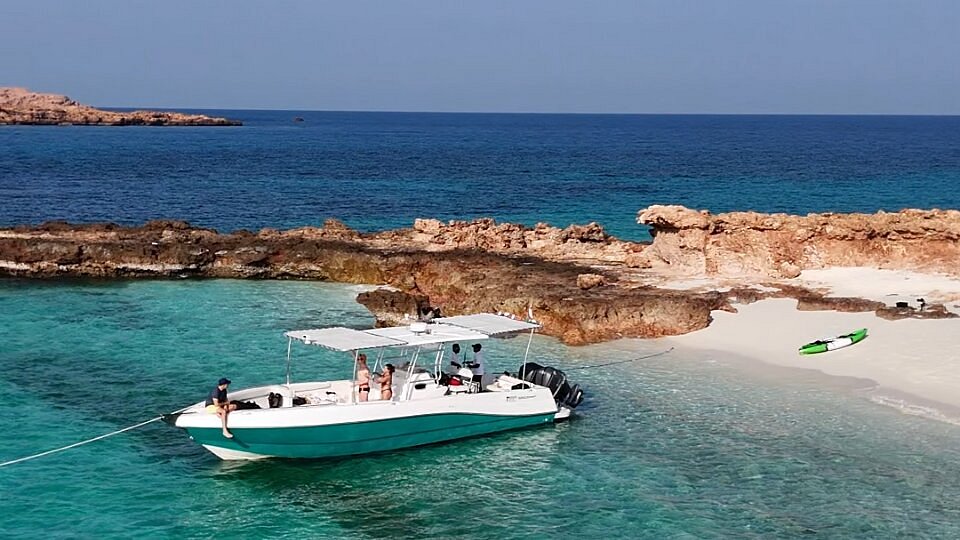
How to get there: The islands are accessible only by boat. Most tours depart from Al Mouj Marina or Seeb Port in Muscat. The boat journey takes approximately 40–60 minutes,s depending on sea conditions.
Book a morning tour: Morning departures consistently offer calmer seas, better visibility, and higher chances of whale shark sightings. Afternoons can see increased wind and choppier water.
What to bring:
- Reef-safe sunscreen (standard chemical sunscreens are harmful to coral; this matters here)
- Underwater camera or GoPro
- A light rashguard or wetsuit in the winter months (water drops to around 15°C, December–January)
- Seasickness tablets if you’re prone to motion sickness on open water
Respect the reserve:
- Never touch turtles, coral, or any marine life
- Do not stand on coral formations
- Keep a distance of at least 3 meters from turtles
- Follow your guide’s instructions at all times
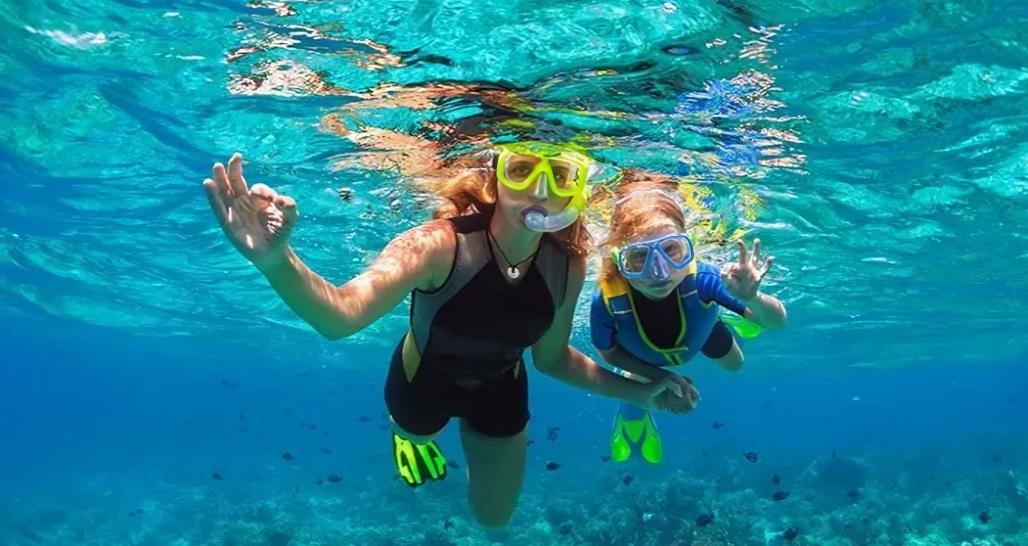
Skill level required: You don’t need to be a strong swimmer to enjoy the Daymaniyat Islands. Life jackets are provided for non-swimmers and children. Scuba diving options are available for certified divers at all experience levels.
Best Dive Sites to Find These Species
|
Dive Site |
Key Species |
Depth |
Best For |
|
Turtle City |
Green & Hawksbill Turtles |
2–8m |
Snorkelers & beginners |
|
Aquarium |
Reef fish, corals, everything |
5–20m |
All levels |
|
Hayut Run |
Leopard sharks, moray eels, rays |
8–18m |
Intermediate divers |
|
Seahorse Bay |
Clownfish, morays, seahorses |
5–15m |
Macro photography |
|
Open water (crossing) |
Whale sharks, dolphins |
Surface |
Snorkelers in season |
|
Al Munassir Wreck (nearby) |
Giant morays, groupers, lobsters |
10–28m |
Advanced divers |
Frequently Asked Questions About Marine Life at Daymaniyat Islands
What marine animals are most commonly seen at Daymaniyat Islands?
Green sea turtles are the most reliably spotted species; they’re present year-round in large numbers, particularly at Turtle City. Blacktip reef sharks, parrotfish, moray eels, and stingrays are also very commonly seen on virtually every visit.
When is the best time to see whale sharks at Daymaniyat Islands?
Whale sharks pass through Omani waters primarily between June and October, with August and September considered peak season. Morning tours from Muscat give you the best odds of a sighting, as operators often spot them during the boat crossing to the islands.
Is it safe to snorkel with sharks at Daymaniyat Islands?
Yes. Both blacktip reef sharks and leopard sharks (the most common species) are non-aggressive toward humans. They are naturally shy and typically move away from snorkelers. Whale sharks, despite their size, are filter feeders and completely harmless.
Can beginners and non-swimmers see marine life at Daymaniyat?
Absolutely. Many of Daymaniyat’s most impressive species, including green turtles, clownfish, parrotfish, and reef fish, are found in shallow water accessible to snorkelers. Life jackets and flotation aids are available for non-swimmers, and tour guides remain in the water with guests at all times.
Are sea turtles at Daymaniyat Islands endangered?
Yes. Both species found here, the green turtle and hawksbill turtle, are classified as endangered and vulnerable, respectively, on the IUCN Red List. Daymaniyat is one of the world’s most important nesting sites for hawksbill turtles, making conservation of this reserve critically important.
What is the visibility like underwater at Daymaniyat Islands?
Visibility is typically excellent in the mornings and during the November–April season, often reaching 15–20 meters. Afternoon winds and certain tidal conditions can reduce this. Checking the wave forecast before your trip is always a good idea.
Final Verdict: Is Daymaniyat Islands Worth It for Marine Life?
Without a shadow of a doubt, yes.
If you’re visiting Oman and have even a passing interest in the ocean, the Daymaniyat Islands are a non-negotiable stop. There are very few places in the world where you can snorkel, not dive, snorkel with dozens of wild sea turtles, blacktip sharks, stingrays, and kaleidoscopic reef fish, all within a 90-minute round trip from the capital.
For divers, the depth, diversity, and quality of the coral at Daymaniyat put it firmly in the conversation as one of the best dive destinations in the Middle East. For snorkelers, the shallow, protected bays offer encounters that rival some of the world’s most famous wildlife hotspots.
The combination of a strictly enforced marine reserve, pristine coral, genuinely abundant wildlife, and accessibility makes Daymaniyat Islands a rare and remarkable travel experience. Go in November through April for the best conditions and beach access. Go in summer if a whale shark encounter is on your bucket list.
Either way, go.
Planning a Daymaniyat Islands trip?
Browse our current snorkelling, diving and private boat trips, or message our team if you have a question about your travel dates.