You’re standing at the edge of a boat, fins flopping awkwardly, tank strapped to your back, and someone is telling you to just “roll backwards into the water.” Everything inside you says that’s a terrible idea.
And yet you jump.
That moment, right there, is where thousands of divers every year discover something they didn’t expect: it’s not terrifying. It’s actually extraordinary.
Your first scuba dive is one of those experiences that splits your life into before and after. The underwater world is shockingly quiet, surprisingly colorful, and completely unlike anything you’ve seen through a snorkel mask or a nature documentary. But let’s be honest, it can also feel strange, uncomfortable, and a little overwhelming if you don’t know what’s coming.
This guide won’t sugarcoat things or hand you a list of “ten reasons scuba diving will change your life.” Instead, it’ll walk you through exactly what happens, what you’ll feel, what’s normal, and what you should actually pay attention to so you have a genuinely good experience.
Quick Overview: First Scuba Dive at a Glance
- Duration: Most introductory dives last 30–45 minutes in the water
- Depth: Typically 5–12 meters (16–40 feet) for beginners
- Prerequisites: No certification needed for a Discover Scuba Diving (DSD) program
- Minimum age: Usually 10 years old (varies by operator)
- Swimming ability: Basic swimming required; you don’t need to be a strong swimmer
- Supervised: You’ll be accompanied by a certified instructor the entire time
Why People Are Drawn to Scuba Diving
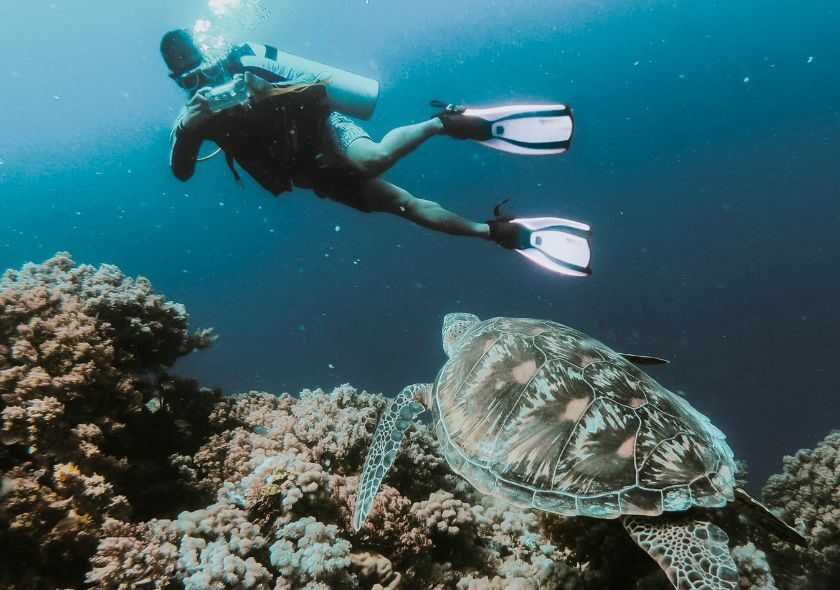
Most first-time divers aren’t chasing adrenaline. They’re chasing something quieter — a sense of weightlessness, the chance to see a sea turtle up close, or simply curiosity about what’s down there.
Scuba diving is one of the few activities where you genuinely leave your everyday world behind. There’s no phone signal, no background noise, no conversations. Just the hiss of your regulator, the sound of your own breathing, and an ecosystem that has been going about its business for millions of years without caring one bit about yours.
That said, it also takes some getting used to. Your first dive is less about mastering skills and more about getting comfortable in an environment that isn’t naturally yours.
The Different Ways to Do Your First Dive
Option 1: Discover Scuba Diving (DSD)
This is the most common entry point. A short pool or shallow-water session is followed by an open-water dive, all supervised by an instructor. No certification required. You learn just enough to be safe, and the instructor handles the rest.
Best for: Tourists, curious travelers, families who want to try it once without committing to a full course.
Option 2: Open Water Certification Course
A multi-day program (usually 3–4 days) that certifies you to dive independently with a buddy to 18 meters. More investment, but it opens the door to diving anywhere in the world.
Best for: Anyone who suspects they’ll want to dive again after their first experience.
Option 3: Pool or Resort Intro Dives
Some resorts offer simplified intro dives in controlled pool environments before heading to the ocean. Good if you’re particularly nervous or have never had a regulator in your mouth before.
What Actually Happens on a Discover Scuba Dive
Here’s the honest step-by-step of what your day will look like.
The Briefing (30–60 Minutes)
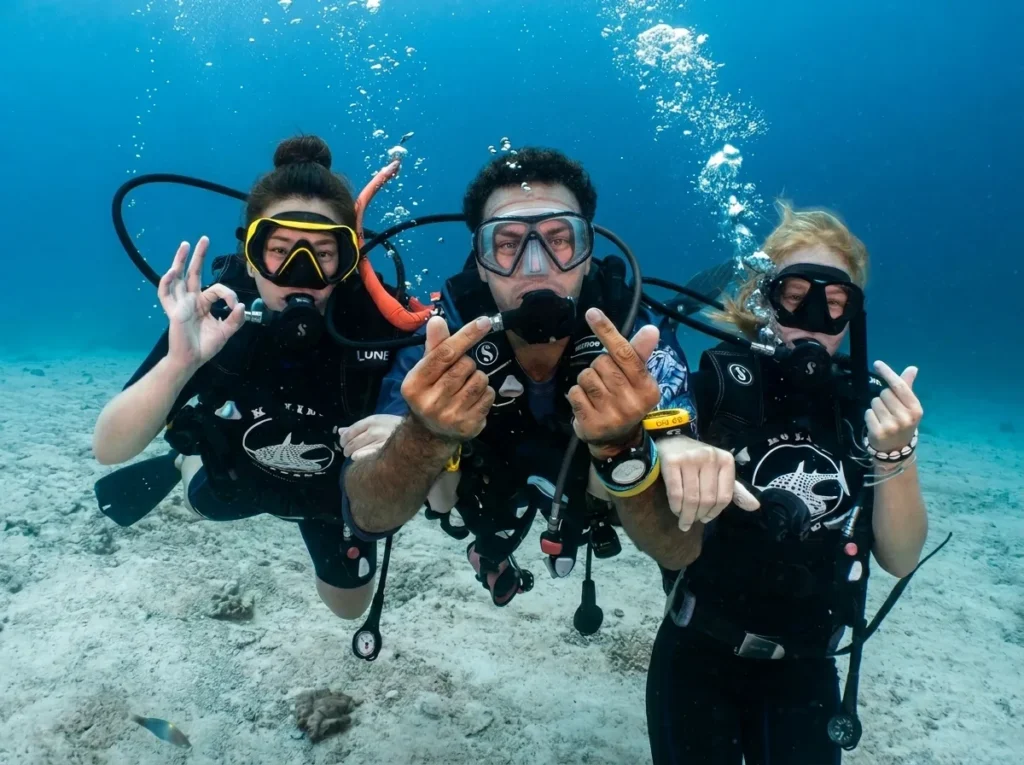
Before anyone gets wet, your instructor will walk you through the basics. This includes how to breathe through the regulator, how to equalize your ears (more on this in a moment), a few simple hand signals, and what to do if you feel uncomfortable.
Pay attention here. Not because the briefing is complicated, it isn’t, but because the concepts will click so much faster in the water if you’ve already heard them once.
Gear Up
You’ll be fitted with a wetsuit, BCD (buoyancy control device, essentially a vest that holds your tank and controls your floating/sinking), mask, fins, and regulator. Most of this will feel clunky and strange on land. That’s completely normal. It all makes more sense in the water.
The Water Entry
Depending on whether you’re diving from a boat or a beach, you’ll either wade in, step off a platform, or do that backwards roll off the boat edge. None of these is as dramatic as they look. Your instructor will show you exactly how.
Descending: The Part Most Beginners Underestimate
This is where the majority of first-time divers hit their first real challenge. As you go deeper, the pressure on your eardrums builds. If you don’t equalize, essentially pinching your nose and gently blowing to pop your ears, similar to what you do on a plane, it becomes uncomfortable quickly.
The key word is gently. Many beginners wait too long, then blow too hard. Equalize early and often, every meter or so on the way down, and it’s barely noticeable.
Your instructor will descend with you slowly. If you feel pain in your ears, signal to stop. Never push through ear pain underwater.
The Dive Itself
Once you’re at depth and your ears have equalized, something shifts. The initial awkwardness fades. Your breathing slows. And you start to actually look around.
What you’ll notice first: the silence. It’s not total silence; you can hear your own breath, the bubbles rising, maybe the distant hum of a boat engine. But the everyday noise of the surface world is completely gone.
What you’ll notice second: the colors. Depending on depth and water clarity, you’ll see fish, coral, sand, and rocks. The light moves differently down here. Everything feels slightly dreamlike.
What you’ll feel in your body: weightless, if the instructor has set up your buoyancy correctly. This is one of the things people never quite expect, that feeling of floating without effort. It’s the closest most of us will get to what astronauts describe.
Breathing: The One Thing You Must Remember
Breathe continuously. Never hold your breath. This is not just a comfort tip; it’s the most important safety rule in scuba diving because holding your breath while ascending can cause a lung overexpansion injury.
The good news: once you have a regulator in your mouth and you’re breathing through it, your body naturally keeps breathing. Most beginners are surprised by how quickly it feels normal. Within the first five minutes, the vast majority of people have forgotten that breathing underwater is supposed to be weird.
Common Feelings During Your First Dive (And What They Mean)
Mild anxiety at the start: Normal. Give it five minutes.
Feeling like you can’t breathe enough: Almost always a mental response, not a physical one. Slow your breathing. Take longer, deeper breaths rather than faster, shorter ones.
Ears hurting on descent: You haven’t equalized. Signal your instructor to pause and equalize again before continuing down.
Fogged mask: A small amount of water in your mask is normal and manageable. Your instructor will have shown you how to clear it. It’s not an emergency.
Feeling cold: Even in warm water, most people feel cool after 20–30 minutes. A wetsuit helps, but factor this in if you’re thinking about a second dive.
Reluctance to surface: The most common “problem.” Many first-time divers genuinely don’t want to come back up.
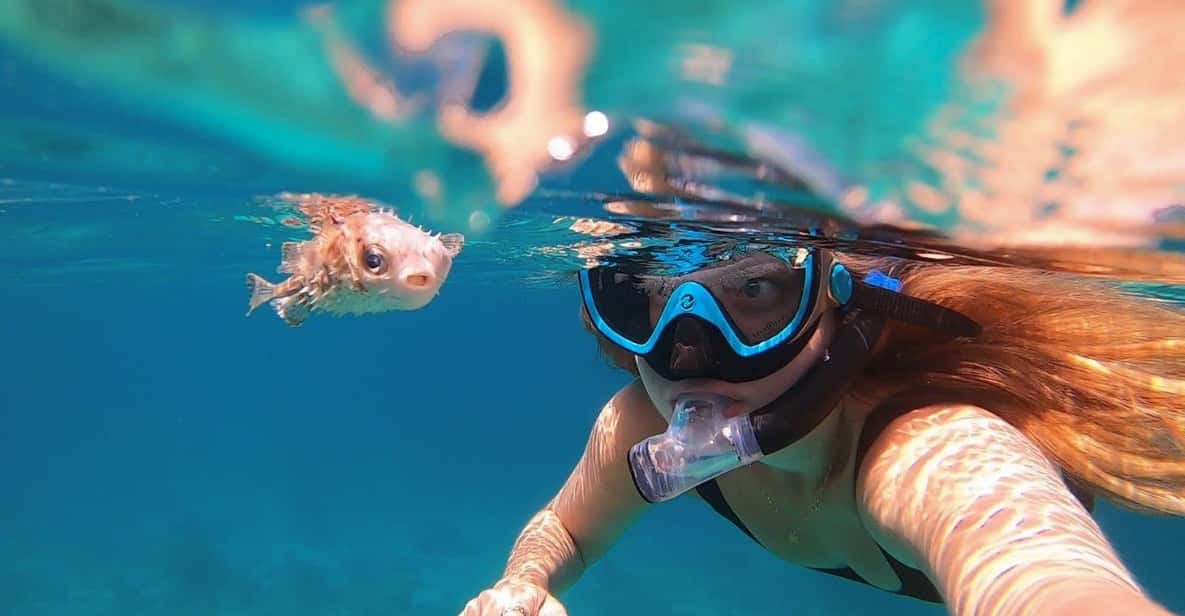
Comparison: Snorkeling vs. Scuba Diving (For First-Timers)
|
Factor |
Snorkeling |
Scuba Diving |
|
Depth |
Surface only |
5–40 meters |
|
Marine life access |
Limited |
Full reef access |
|
Equipment complexity |
Minimal |
Moderate |
|
Training required |
None |
Brief briefing/course |
|
Physical exertion |
Low–moderate |
Low (once buoyant) |
|
Duration underwater |
As long as you can float |
30–60 minutes |
|
Cost |
Low |
Moderate–high |
Best Destinations for a First Scuba Dive
You can do your first dive in many places around the world, but some spots are genuinely better suited for beginners: calm water, good visibility, and plenty of marine life without strong currents.
Top destinations include the Great Barrier Reef in Australia, the Red Sea (particularly Dahab and Sharm el-Sheikh in Egypt), Koh Tao in Thailand, the Maldives, Cozumel in Mexico, and Bali in Indonesia. Each offers warm water, excellent visibility, and a large number of experienced dive operators.
What to Bring and What to Wear
The dive center will provide all the equipment. What you need to bring:
- Swimsuit (worn under the wetsuit)
- Towel
- Sunscreen (apply before, not after; reef-safe options are strongly preferred)
- Any prescription medication if you’re prone to motion sickness
- Proof of swimming ability may be requested
- Any medical forms the operator sends in advance
Do not bring: large jewelry, anything you’d be devastated to lose, or a GoPro on your first dive (wait until you’re comfortable before adding extra gear to manage).
Safety: The Honest Truth
Scuba diving has an excellent safety record when done with qualified instructors and reputable operators. Serious accidents are rare. The most common issues for first-time divers are minor: ear discomfort, mild anxiety, or simply feeling overwhelmed.
That said, certain medical conditions require a doctor’s clearance before diving. These include asthma, recent ear infections, sinus issues, heart conditions, epilepsy, and pregnancy. Most operators will ask you to fill out a medical questionnaire. Answer it honestly — this is not the place to fudge details.
And the one rule that almost every safety problem traces back to violating: never hold your breath underwater.
Sample First Dive Day Itinerary
Morning: Arrive at the dive center, fill out paperwork, attend briefing (45–60 min) Late morning: Pool or shallow-water gear practice (20–30 min) Midday: Travel to dive site and first open-water dive (30–45 min in water) Early afternoon: Surface, debrief with instructor, optional second dive Evening: That slightly stunned, euphoric feeling that most people describe as “needing to do that again”
Is Scuba Diving Right for You? Pros and Cons
Pros:
- Accessible to most people with basic health
- No prior experience needed for an introductory dive
- One of the most memorable experiences available to travelers
- Opens up an entirely different dimension of a destination
Cons:
- Equipment is expensive to buy (renting is standard for beginners)
- Some medical conditions prevent diving
- Can trigger claustrophobia or anxiety in some people
- Certification is needed for independent diving
Hidden Aspects Nobody Talks About
The paperwork. Every dive center requires a medical and liability form. It’s standard and takes five minutes, but first-timers are sometimes surprised by it.
The surface conditions don’t reflect the underwater ones. It can be choppy and uncomfortable getting to the site, then completely calm ten meters down.
You will use more air if you’re anxious. Nervous breathing burns through your tank faster. Instructors know this and plan accordingly.
Night dives exist and are incredible, but that’s a conversation for after your fifth or sixth dive, not your first.
Frequently Asked Questions
What is the minimum age for a first scuba dive?
Most operators accept children from age 10 for introductory dives, though this varies. PADI and SSI certification courses generally begin full open-water certification at age 10, with junior diver programs for younger children.
Do I need to know how to swim or scuba dive?
Basic swimming ability is required. You should be comfortable in open water. You don’t need to be a strong swimmer or know specific strokes.
How deep do you go on a first scuba dive?
Most introductory dives stay between 5 and 12 meters. Some programs go slightly deeper, but exceeding 18 meters requires full certification.
Is it safe to scuba dive if I have anxiety?
Many people with anxiety dive successfully. The key is choosing a patient instructor, going slowly, and communicating openly. Some people find that scuba diving actually helps with anxiety because the slow, deliberate breathing technique is calming.
Will I be able to breathe normally underwater?
Yes. The regulator delivers air on demand every time you inhale. After the first minute or two, the vast majority of people breathe comfortably and naturally.
Conclusion
The underwater world has been there your entire life. It will keep going with or without you. But if you’ve made it to the bottom of this guide, something in you is curious enough to consider going to see it for yourself.
You don’t need to be an athlete, an adrenaline junkie, or a natural swimmer. You need to be willing to breathe slowly, listen to your instructor, and give yourself about five minutes to adjust before passing judgment.
That backwards roll off the boat? It’s worth it.
Book with a reputable operator, tell your instructor if you’re nervous, and take the first breath through that regulator with the confidence that millions of people have done exactly this before you and almost all of them surfaced with a grin they couldn’t quite explain.
Planning a Daymaniyat Islands trip?
Browse our current snorkelling, diving and private boat trips, or message our team if you have a question about your travel dates.