When most travelers think of world-class snorkeling, the Great Barrier Reef or the Maldives come to mind. But seasoned divers and underwater explorers know a well-kept secret: Muscat, the capital of Oman, offers some of the most extraordinary snorkeling experiences on the planet, and it is hands-down the snorkeling capital of the Middle East.
Whether you are a first-time snorkeler or a seasoned underwater photographer, Muscat delivers warm, clear waters, thriving coral ecosystems, and encounters with marine life that rival any tropical destination. Here is a deep dive into exactly why Muscat has earned this title.
The Daymaniyat Islands: A UNESCO-Protected Marine Paradise
No conversation about snorkeling in Muscat is complete without mentioning the Daymaniyat Islands Nature Reserve, a UNESCO-listed protected archipelago just 18 km off the coast of Muscat. These nine uninhabited islands are surrounded by some of the clearest waters in the region, with visibility regularly exceeding 15–20 metres.
The Daymaniyat Islands are home to:
- Over 100 species of hard and soft corals
- Hawksbill and green sea turtles are a near-guaranteed sighting
- Reef sharks, barracuda, rays, and moray eels
- Hundreds of species of tropical fish, including lionfish, angelfish, and clownfish
- Whale sharks seasonally (June to September)
Pro Tip: The best time to visit the Daymaniyat Islands for snorkeling is between October and May, when sea conditions are calm, and water temperatures hover around 22–28°C. Boat transfers from Al Sawadi Beach take approximately 45 minutes.
Exceptional Year-Round Water Clarity and Visibility
One of Muscat’s biggest advantages over competing snorkeling destinations is its remarkable underwater visibility. The Arabian Sea’s currents bring nutrient-rich, relatively sediment-free waters to Muscat’s coastline, resulting in crystal-clear conditions for most of the year.
Average snorkeling visibility in Muscat ranges from 10 to 25 metres, depending on the season and location. This is significantly better than many popular snorkeling spots in Southeast Asia and the Caribbean, where monsoons and river runoff frequently reduce visibility to just a few metres.
Even during the khareef (monsoon) season from June to September, when the main coast can become choppy, protected bays and dive sites on the eastern side of the Daymaniyat Islands still offer good visibility and calmer conditions.
Rich and Diverse Marine Biodiversity
Muscat sits at a unique geographic intersection between the Indian Ocean, the Arabian Sea, and the Gulf of Oman. This means it benefits from a remarkable diversity of marine life that is unmatched anywhere else in the Middle East.
What You Can Expect to See Snorkeling in Muscat:
- Sea turtles Muscat’s beaches, particularly Ras Al Jinz and the Daymaniyat Islands, are major sea turtle nesting grounds
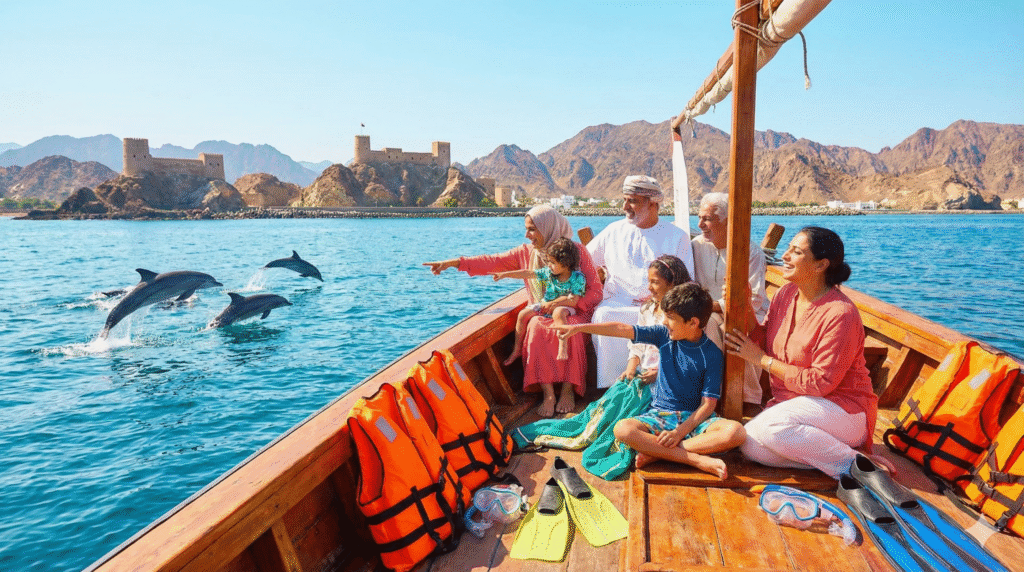
- Dolphins, spinner, bottlenose, and humpback dolphins are commonly spotted on boat trips to snorkeling sites
- Manta rays and eagle raysare gliding along the seafloor
- Whale sharks, between June and September, are the largest fish in the ocean
- Cuttlefish, octopus, and nudibranchs for macro-snorkeling enthusiasts
- Colorful coral gardens with hundreds of species of reef fish
The biodiversity here is not accidental. Oman has invested heavily in marine conservation, with strict regulations protecting wildlife, banning spearfishing, and limiting boat traffic in sensitive areas. The result is an ecosystem that is thriving and largely unspoiled.
Warm Water Temperatures All Year
Unlike snorkeling destinations in the Mediterranean or Pacific, Muscat enjoys warm sea temperatures throughout the year. Water temperatures range from approximately 22°C in January and February (the coolest months) to 32°C during the peak summer months.
This means:
- No wetsuit needed for most of the year, a rash guard or light wetsuit top is sufficient
- Comfortable conditions even for beginner snorkelers and children
- No risk of cold-water shock or hyperthermia
For families and casual snorkelers especially, this is a huge draw. You can simply slip into the water and explore without needing specialist equipment or thermal protection.
World-Class Snorkeling Infrastructure and Accessibility
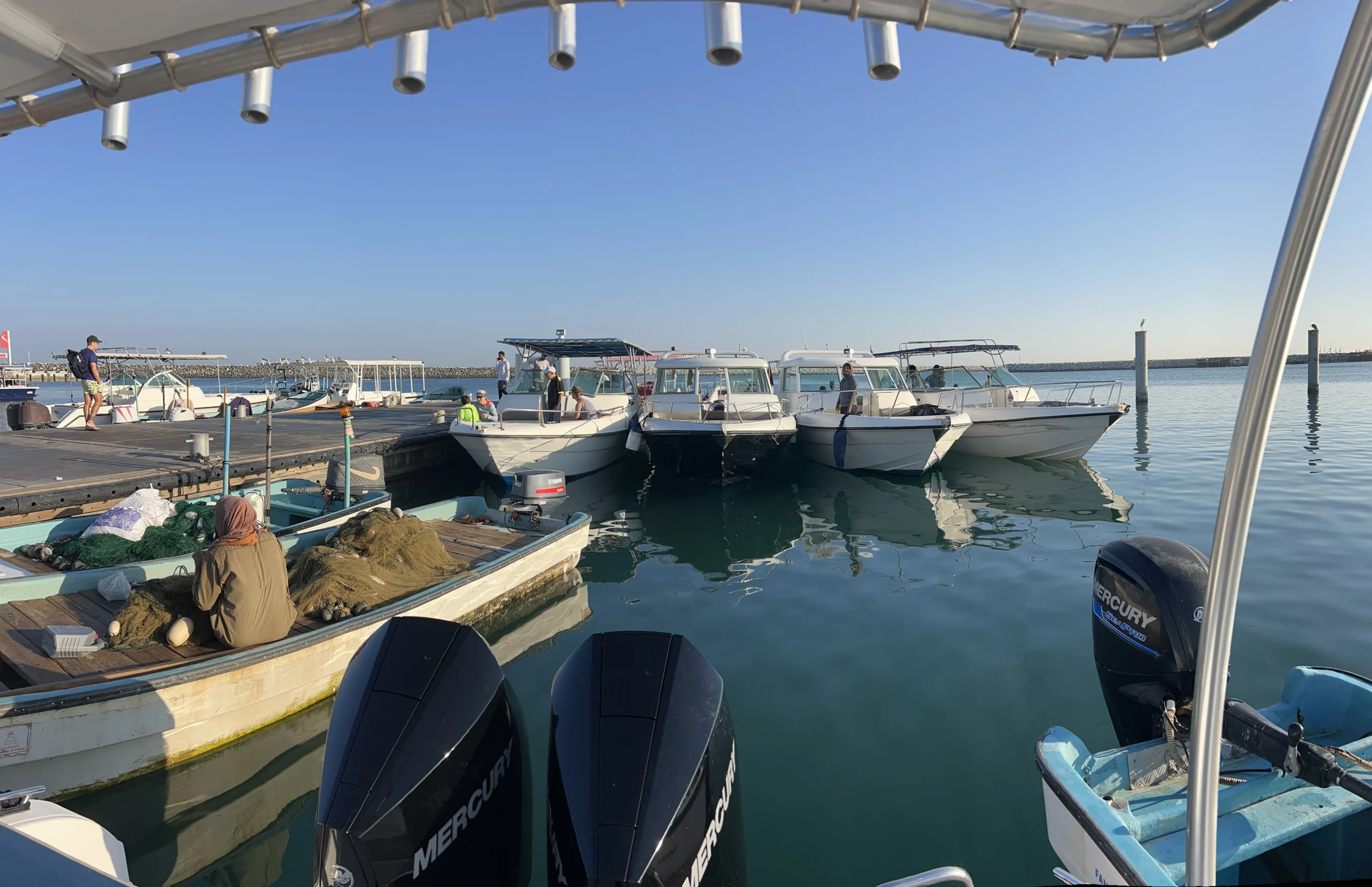
Muscat has invested significantly in tourism infrastructure over the past decade, and this extends to its water sports and snorkeling scene. Multiple PADI-certified dive and snorkeling operators are based in Muscat and Al Mouj Marina, offering guided snorkeling tours with full equipment rental, safety briefings, and expert marine naturalists.
Top Snorkeling Sites Near Muscat:
- Daymaniyat Islands Nature Reserve is the crown jewel
- Fahal Island (Cat Island) is accessible and excellent for beginners
- Bandar Khayran is a stunning bay with protected coves, perfect for shallow reef snorkeling
- Ras Abu Dawood is known for abundant soft corals and sea fans
- Muscat Aquarium & Coral Gardens are ideal for children and nervous first-timers
Most snorkeling sites are a short boat ride from Muscat’s marinas, making logistics effortless compared to remote island destinations in Southeast Asia or the Pacific.
Untouched Coral Reefs in Near-Pristine Condition
Coral bleaching, pollution, and overtourism have devastated reef ecosystems across the Indian Ocean and Pacific in recent decades. Muscat’s reefs, however, remain in comparatively excellent condition, thanks to Oman’s proactive conservation approach.
The Daymaniyat Islands Nature Reserve was established in 1996 and has strict access controls, including seasonal closures during sea turtle nesting (May to October on certain beaches). Only licensed operators are permitted to bring visitors to the most sensitive sites, and anchoring on live coral is prohibited.
This means that when you snorkel in Muscat, you are not paddling over bleached coral skeletons and dead reef; you are exploring a living, breathing ecosystem that has been preserved for future generations.
Oman’s Commitment to Marine Conservation
Snorkeling in Muscat is not just a great experience; it is an ethical one. The Sultanate of Oman has been a regional leader in marine conservation for decades, with policies that protect everything from sea turtles and whale sharks to coral ecosystems and migratory fish species.
Key conservation facts:
- Oman has one of the largest sea turtle nesting populations in the world, with Ras Al Jinz Turtle Reserve protecting nesting hawksbill and green turtles
- Whale shark feeding and interaction are regulated and monitored
- Fishing restrictions in protected marine areas are rigorously enforced
- Oman was ranked among the most sustainable tourism destinations in the Arab world by the World Economic Forum
For eco-conscious travelers, snorkeling in Muscat is a way to enjoy extraordinary natural beauty while supporting a destination that genuinely prioritizes conservation over mass tourism.
A Unique Cultural Experience Above and Below the Water
Snorkeling in Muscat is not just about what is underwater. Muscat itself is one of the most culturally rich capitals in the Middle East, a city where ancient forts, frankincense markets, traditional dhow boats, and modern luxury hotels coexist in harmony.
A typical snorkeling day in Muscat might include:
- Morning snorkeling at the Daymaniyat Islands with dolphins accompanying your boat
- Lunch on a traditional Omani wooden dhow with fresh seafood
- Afternoon exploration of the Grand Mosque or the labyrinthine Muttrah Souq
- Sunset over the Sultan’s Palace on the old Muscat waterfront
This combination of world-class underwater adventures with authentic cultural immersion makes Muscat unique. You cannot find this combination at a Maldivian resort or a Thai beach. Muscat offers depth (literally and figuratively) that few snorkeling destinations can match.
Competitive Pricing Compared to Indian Ocean Destinations
Snorkeling holidays in the Maldives or Seychelles often come with eye-watering price tags, especially if you need to stay at an overwater bungalow resort to access the best reefs. Muscat, by contrast, offers world-class snorkeling at a fraction of the cost.
A full-day guided snorkeling trip to the Daymaniyat Islands, including equipment, lunch, and boat transfer, typically costs between OMR 25–45 per person (approximately USD 65–120). Budget accommodation in Muscat starts from as little as USD 40 per night, while luxury options are available at considerably lower rates than comparable Indian Ocean resorts.
For travelers who want outstanding underwater experiences without the premium price of Maldivian or Seychellois resorts, Muscat is the smart choice.
Easy International Access and Year-Round Flights
Muscat International Airport (MCT) is one of the best-connected airports in the Middle East, with direct flights to over 60 countries served by Oman Air and major international carriers including British Airways, Lufthansa, Air India, and Emirates.
Oman also has a relatively straightforward visa-on-arrival policy for citizens of many countries, including the UK, USA, EU nations, Australia, and most Asian countries. This makes planning a snorkeling trip to Muscat considerably easier than visiting remote island destinations in Indonesia or the Pacific.
Flight times to Muscat are also shorter than many competing destinations: approximately 7 hours from London, 14 hours from New York, and just 3–4 hours from most South and Southeast Asian hubs.
Frequently Asked Questions: Snorkeling in Muscat
When is the best time to go snorkeling in Muscat?
The best time for snorkeling in Muscat is between October and May, when the seas are calm, visibility is at its highest, and water temperatures are comfortable. June to September is the khareef (monsoon) season, which can bring choppy conditions on the main coast, though protected sites like the Daymaniyat Islands may still be accessible on good days.
Do I need snorkeling experience to visit?
No. Muscat’s snorkeling sites cater to all ability levels. Fahal Island, Bandar Khayran, and several beach sites offer extremely shallow, calm water suitable for beginners and children. More advanced sites like the deep reefs of the Daymaniyat Islands, are suitable for confident swimmers.
Can I see whale sharks snorkeling in Muscat?
Yes! Whale sharks are seasonal visitors to Oman’s waters, typically appearing between June and September when the monsoon brings nutrient-rich upwellings. Licensed operators offer guided whale shark snorkeling and swimming experiences during this season.
Is snorkeling in Muscat safe?
Yes. Muscat’s snorkeling sites are well-managed, and licensed operators conduct thorough safety briefings. The marine life is non-aggressive there have been no recorded shark attacks in Oman’s tourism waters. Always snorkel with a buddy, use reef-safe sunscreen, and follow your guide’s instructions.
What equipment do I need?
All essential snorkeling equipment (mask, fins, snorkel, life vest) can be rented from any reputable dive and snorkeling operator in Muscat. You do not need to bring your own, though serious underwater photographers may wish to bring their own camera equipment.
Conclusion
Muscat ticks every box that a world-class snorkeling destination must: protected coral reefs, extraordinary marine biodiversity, warm and clear waters, excellent infrastructure, ethical conservation practices, and a rich cultural experience on land to complement the underwater adventures.
Unlike mass-tourism snorkeling hotspots in Southeast Asia or the Indian Ocean, Muscat offers an experience that feels genuine, uncrowded, and deeply rewarding. The Daymaniyat Islands alone could justify a trip halfway around the world. When you add in sea turtles, whale sharks, dolphins, pristine coral gardens, and the cultural richness of one of the Middle East’s most beautiful capitals, the case becomes irrefutable.
Muscat is not just the snorkeling capital of the Middle East. For those who discover it, it quickly becomes one of their favourite snorkeling destinations in the world.
Planning a Daymaniyat Islands trip?
Browse our current snorkelling, diving and private boat trips, or message our team if you have a question about your travel dates.