Can You Snorkel With Turtles in Oman?
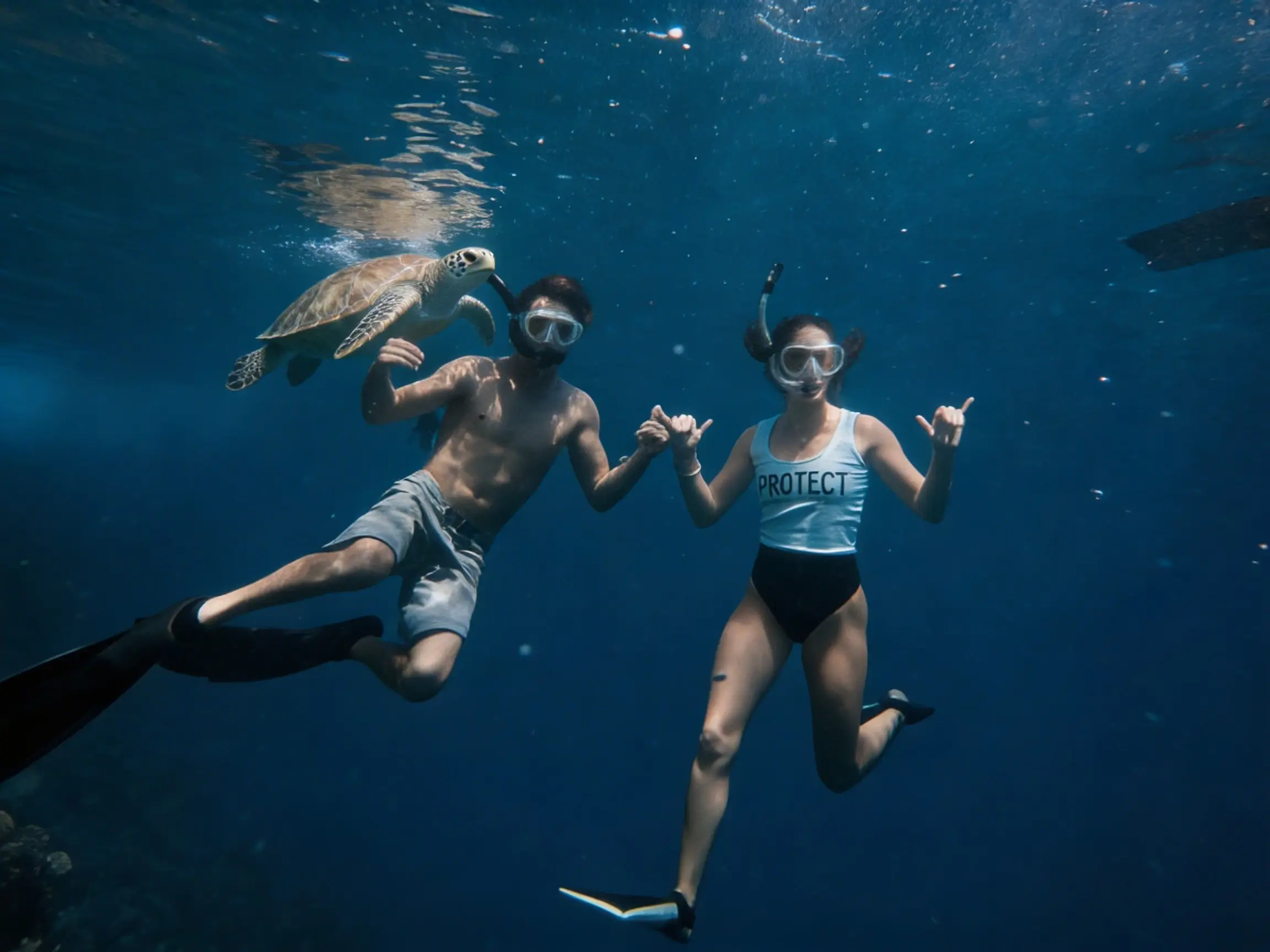
Yes. Sea turtles live in Omani waters, and snorkellers may encounter them at suitable marine locations around the country. Oman records five of the world’s seven sea turtle species in its waters, although sightings during any individual snorkelling trip are never guaranteed.
The type of turtle experience depends heavily on where you go. The Daymaniyat Islands are known for boat-based snorkelling, reefs and marine life, while places such as Ras Al Jinz and Ras Al Hadd are better known for observing turtles coming ashore to nest.
Where Can You Snorkel With Turtles Near Muscat?
For travellers looking for snorkelling in Muscat, the Daymaniyat Islands are one of the most practical places to combine a boat trip, coral and reef snorkelling, swimming and the possibility of seeing sea turtles in the water.
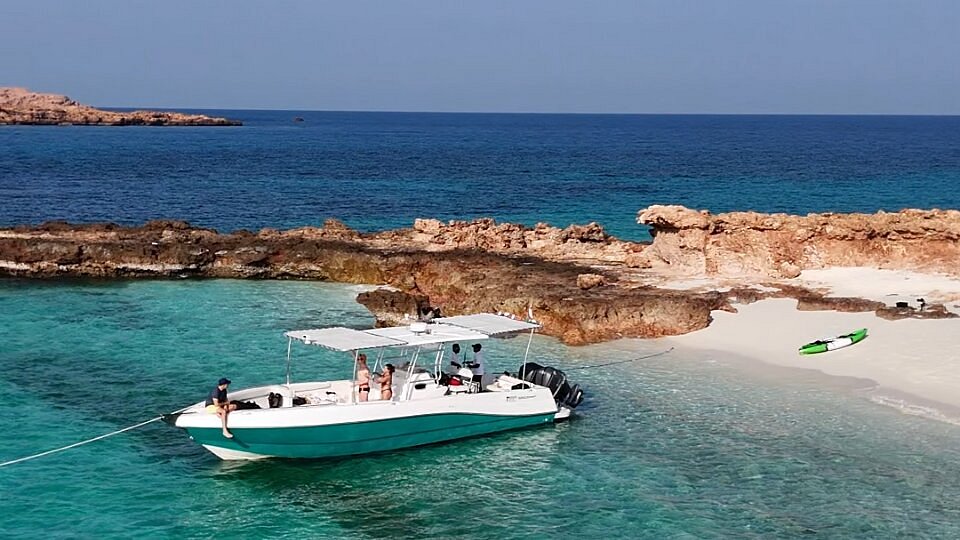
The islands are reached by boat from the Muscat area, with operators commonly using departure points such as Seeb Marina and Al Mouj Marina. Once inside the marine reserve, snorkelling locations are normally selected according to sea conditions, visibility, current and safety.
A turtle encounter should always be treated as a wildlife experience, not a scheduled attraction. Turtles move naturally through the reserve, so one trip may include several sightings while another may include none.
Snorkelling With Turtles Is Different From Turtle Watching
This distinction is important when planning a trip in Oman. Snorkelling gives you the possibility of seeing turtles in their marine habitat, whereas dedicated turtle-watching destinations focus on observing nesting activity from the beach under controlled conditions.
If your main goal is swimming and snorkelling, a marine destination such as the Daymaniyat Islands is the more relevant type of experience. If your priority is watching turtles come ashore and nest, Ras Al Jinz and the Ras Al Hadd area offer a very different experience.
Best Places to See Turtles in Oman
Oman offers several very different turtle experiences. Some destinations are suited to snorkelling and seeing turtles in the water, while others are better known for observing turtles nesting on protected beaches.
If your main goal is specifically snorkelling with turtles, the Daymaniyat Islands are the most practical option for many visitors staying in Muscat. Ras Al Jinz and Masirah Island are important turtle destinations too, but the experience is different.
| Destination | Best for | Turtle experience | From Muscat |
|---|---|---|---|
| Daymaniyat Islands Marine nature reserve | Snorkelling, reefs and marine life | Possible encounters with turtles while snorkelling or swimming | Easy day-trip option Boat departure from the Muscat area |
| Ras Al Jinz & Ras Al Hadd Turtle nesting area | Watching nesting turtles | Guided observation of turtles coming ashore and nesting | Requires a road trip Often better as part of a longer itinerary |
| Masirah Island Remote island destination | Turtle nesting, wildlife and remote nature | Important nesting beaches used by several turtle species | Requires more travel Better suited to a dedicated island trip |
Daymaniyat Islands
For travellers interested in snorkelling in Muscat, the Daymaniyat Islands are one of the most convenient marine experiences accessible from the city. The protected reserve combines coral areas, reef fish, clear-water snorkelling and the possibility of encountering sea turtles.
Visitors normally reach the islands on an organised boat trip from the Muscat area. Seeb Marina and Al Mouj Marina are both used by operators, and the exact snorkelling locations are chosen according to sea conditions, current, visibility and safety.
Turtles may be seen swimming around reef areas or surfacing nearby, but sightings are not guaranteed. The experience should be viewed as a marine-life trip rather than a guaranteed turtle encounter.
Read the Daymaniyat Islands day-trip guideRas Al Jinz and Ras Al Hadd
Ras Al Jinz and the wider Ras Al Hadd area are among Oman’s best-known turtle nesting destinations. The experience here is fundamentally different from snorkelling at the Daymaniyat Islands.
Visitors come primarily to observe turtles reaching the beach and nesting under controlled conditions, often through guided turtle-watching experiences designed to reduce disturbance to the animals.
If your main goal is to watch turtle nesting behaviour, this area is far more relevant than choosing a normal snorkelling trip. It should not, however, be presented as one of Oman’s primary snorkelling-with-turtles destinations.
Masirah Island
Masirah Island is another important turtle destination in Oman, with beaches used by loggerhead, green, hawksbill and olive ridley turtles for nesting.
Unlike a half-day boat excursion from Muscat, visiting Masirah requires a more substantial journey and is better treated as a destination in its own right. It suits travellers who want remote beaches, wildlife and a quieter island experience rather than a short snorkelling excursion.
Marine activities are possible around the island, but travellers should not assume that a visit to Masirah automatically includes a snorkelling-with-turtles experience. The island’s importance is especially connected to its nesting beaches.
Snorkelling With Turtles at the Daymaniyat Islands
The Daymaniyat Islands are one of the most practical places for travellers staying in Muscat to combine reef snorkelling with the possibility of seeing sea turtles in their natural marine environment.
The islands are reached by boat from the Muscat area rather than by a long road journey, which makes them particularly relevant for visitors searching for snorkelling in Muscat or a half-day marine experience during a city stay.
What Is the Turtle Snorkelling Experience Like?
A typical visit begins with a boat journey from the Muscat area to the Daymaniyat Islands Nature Reserve. Operators commonly depart from marinas such as Seeb Marina and Al Mouj Marina, although the exact departure point depends on the company you book with.
Once inside the reserve, the captain or guide chooses suitable snorkelling locations according to visibility, waves, currents and overall safety. Guests normally enter the water directly from the boat and explore reef areas where turtles and other marine life may be encountered.
The experience is not designed around approaching a specific turtle. Instead, snorkellers move through the marine environment and may see turtles swimming nearby, resting around reef areas or surfacing for air.
Are Turtles Guaranteed at the Daymaniyat Islands?
No. Sea turtles are an important part of the Daymaniyat marine environment, but they are wild animals and no specific sighting can be guaranteed.
One trip may include several turtle encounters while another may be quieter. Weather, visibility, currents, the chosen snorkelling site and the natural movement of wildlife all affect what visitors see.
It is better to choose the Daymaniyat Islands for the complete marine experience — snorkelling, reefs, fish, clear water and the chance of seeing turtles — rather than booking with the expectation that one particular animal must appear.
What Else Can You See While Snorkelling?
Turtles are only one part of the underwater environment. Depending on the location and conditions, snorkellers can also explore coral areas and see different reef fish and other marine life.
Visitors interested in the wider ecosystem can read our guide to marine species at the Daymaniyat Islands rather than treating this page as a complete wildlife catalogue.
Snorkelling Continues Throughout the Year
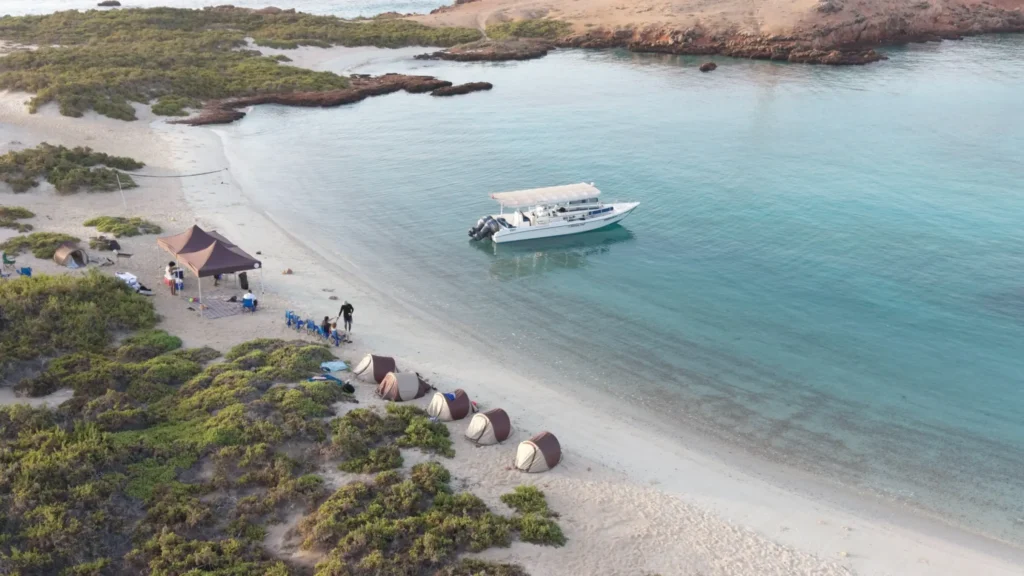
From 1 May to 31 October, Daymaniyat trips remain boat-based and visitors can continue snorkelling and swimming, but island landing and beach stops are not permitted.
From 1 November to 30 April, seasonal island or beach access may be possible when reserve rules, weather and sea conditions allow.
Planning a Daymaniyat Turtle Snorkelling Trip
If the Daymaniyat Islands sound like the right option, use our Daymaniyat Islands day-trip guide for practical information about departure marinas, trip types, timings, seasonal access and what to bring.
For more detailed information specifically about turtles in the reserve, including their role in the Daymaniyat ecosystem, continue to our turtles in the Daymaniyat Islands guide .
Turtle Watching at Ras Al Jinz and Ras Al Hadd
Ras Al Jinz and the wider Ras Al Hadd area are among Oman’s best-known places for observing sea turtles on nesting beaches. This is a very different experience from snorkelling with turtles around the Daymaniyat Islands.
Travellers visit this part of Oman primarily to watch turtles coming ashore, preparing nests and laying eggs under controlled viewing conditions. It should therefore be considered a turtle-watching destination rather than a primary turtle-snorkelling destination.
What Happens on a Ras Al Jinz Turtle-Watching Experience?
Turtle viewing at Ras Al Jinz is organised around guided visits to the nesting beach. Visitors follow trained guides and observe turtle activity while restrictions are used to reduce disturbance to the animals.
The experience usually takes place during periods when turtles are active on the beach, including scheduled night or early-morning viewing sessions. Exact viewing arrangements can vary by season and should be confirmed directly with the reserve before travelling.
Green turtles are strongly associated with the reserve, and the main attraction is the opportunity to observe natural nesting behaviour rather than entering the water with turtles.
Can You Snorkel With Turtles at Ras Al Jinz?
Ras Al Jinz should not be treated as one of Oman’s main snorkelling-with-turtles destinations. Its established visitor experience centres on guided observation of nesting turtles from the beach.
Marine and diving activities may be available in the wider region, but they are separate from the reserve’s turtle-viewing programme. Travellers whose main goal is to snorkel in the water with a chance of seeing turtles are better served by a marine destination such as the Daymaniyat Islands.
What Is the Difference Between Ras Al Jinz and Ras Al Hadd?
Ras Al Hadd refers to the wider coastal area associated with turtle nesting, while Ras Al Jinz is the best-known organised visitor experience within that region.
For most international visitors planning a dedicated turtle-watching experience, Ras Al Jinz is the more straightforward place to research because guided viewing and visitor facilities are specifically organised around turtle conservation and observation.
Daymaniyat Islands or Ras Al Jinz?
Both places involve sea turtles, but they satisfy very different travel interests.
Daymaniyat Islands
Choose Daymaniyat when your priority is a boat trip, reef snorkelling, swimming and the possibility of encountering turtles naturally in the water.
- Experience
- Marine / underwater
- Main activity
- Snorkelling and swimming
- Turtle encounter
- Possible, never guaranteed
- Good from Muscat?
- Yes
Ras Al Jinz
Choose Ras Al Jinz when your priority is observing turtles coming ashore and learning about their nesting behaviour through a guided conservation-focused experience.
- Experience
- Beach / land-based
- Main activity
- Guided turtle watching
- Turtle encounter
- Nesting observation
- Good from Muscat?
- Better as a longer road trip
What Turtle Species Live in Oman?
Five of the world’s seven sea turtle species have been recorded in Omani waters. Four of them — green, loggerhead, hawksbill and olive ridley turtles — nest on beaches in Oman, while leatherback turtles are considered irregular visitors.
That does not mean a snorkeller should expect to encounter all five species. Their distribution, nesting behaviour and likelihood of being seen in the water vary considerably between different parts of Oman.
Green Turtle
Green turtles are one of the best-known turtle species in Oman and are closely associated with major nesting areas such as Ras Al Jinz and Ras Al Hadd.
They may also be encountered in Omani marine habitats, but seeing one while snorkelling remains a natural wildlife encounter rather than a guaranteed part of a trip.
Loggerhead Turtle
Loggerhead turtles also nest in Oman, with Masirah Island particularly important for their nesting activity.
Their presence is one reason Masirah is significant from a turtle conservation perspective, although a nesting destination should not automatically be treated as a guaranteed snorkelling location.
Hawksbill Turtle
Hawksbill turtles are another species known to nest on Omani beaches and form part of the country’s wider marine biodiversity.
Like other turtle species, their occurrence in Oman does not mean they will necessarily be seen during an ordinary snorkelling trip.
Olive Ridley Turtle
Olive ridley turtles also nest in Oman and are recorded as part of the country’s native sea turtle population.
They are particularly relevant when discussing Oman’s nesting biodiversity, rather than being presented as a species travellers should expect on every marine excursion.
Leatherback Turtle
Leatherback turtles have been recorded in Omani waters, but they are considered irregular visitors rather than one of the species that normally nests on Oman’s beaches.
Their inclusion in Oman’s turtle biodiversity should therefore not be interpreted as meaning leatherback encounters are common for snorkellers or coastal visitors.
Five Species in the Water, Four Nesting Species
Green, loggerhead, hawksbill and olive ridley turtles all nest in Oman.
Leatherback turtles may occur in Omani waters but are irregular visitors and do not normally nest in the country.
Best Time to See Turtles in Oman
There is no single turtle season that applies to every destination in Oman. The best time depends on whether you want to snorkel in the sea, watch turtles nesting on a beach or see hatchlings emerging from nests.
For travellers interested in turtle snorkelling near Muscat, the Daymaniyat Islands can be visited on boat-based trips throughout the year when weather and sea conditions allow. Ras Al Jinz follows a different seasonal pattern because its main attraction is turtle nesting and hatching activity on the beach.
Daymaniyat Islands
Snorkelling trips operate across the year, but visibility, waves, currents and wildlife activity naturally change with conditions. There is no responsible month in which a turtle sighting should be promised.
Ras Al Jinz & Ras Al Hadd
Green turtle nesting activity takes place over an extended period, with the strongest nesting period generally occurring during the warmer months.
Ras Al Jinz Area
As eggs laid earlier in the nesting season begin to hatch, visitors may have opportunities to observe hatchling activity during suitable guided viewing periods.
The Season Changes Island Access, Not Whether Boats Can Visit
This distinction is particularly important for travellers planning snorkelling in Muscat.
Boat-Based Season
Snorkelling and swimming around the reserve can continue, but visitors cannot land on the islands or use the beaches during this protected period.
Seasonal Landing Period
Boat trips and snorkelling continue, and island or beach access may also be possible when reserve regulations, weather and sea conditions allow.
Choose Your Timing Based on What You Want to See
| Your goal | Suggested timing | What to know |
|---|---|---|
| Snorkelling near Muscat | Throughout the year | Daymaniyat boat trips can operate year-round when weather and sea conditions permit. Turtle sightings remain unpredictable. |
| Watch nesting turtles | June–September | This is generally the strongest nesting period around Ras Al Jinz and Ras Al Hadd. |
| Possible hatchling activity | Around August–December | Hatchling timing depends on when nests were laid and natural conditions. |
| Daymaniyat beach or island access | November–April | Landing may be permitted during this period, subject to reserve rules and conditions. |
| Daymaniyat boat snorkelling only | May–October also works | No island landing is allowed, but swimming and snorkelling from the boat can continue. |
What Is Snorkelling With Turtles in Oman Actually Like?
Snorkelling with turtles in Oman is not a staged wildlife encounter. You enter a natural marine environment, explore the reef and may encounter a turtle moving through the same area.
Around destinations such as the Daymaniyat Islands, snorkelling is usually boat-based. The exact location is chosen according to visibility, current, waves and safety rather than because a turtle has been placed or guaranteed there.
From the Boat to the Reef
-
1
The boat reaches a suitable snorkelling area
The captain or guide selects a location based on the conditions that day rather than following exactly the same stop on every trip.
-
2
You prepare before entering the water
Guests receive any necessary safety guidance, check their mask and snorkel and use a life jacket where needed before entering from the boat.
-
3
You explore the reef and surrounding water
Snorkellers move through the area at a comfortable pace while looking at coral, reef fish and other marine life. Water depth and visibility vary between locations.
-
4
A turtle may appear naturally
If a turtle enters the area, the best experience comes from observing it calmly rather than swimming directly after it or trying to control the encounter.
What Does a Turtle Encounter Look Like?
A turtle encounter can be surprisingly simple. You may notice one swimming across the reef, moving through open water or surfacing nearby before continuing on its way.
Sometimes the encounter lasts long enough to watch the turtle move through the area, while on another occasion it may pass quickly and disappear from view. The animal decides how long the encounter lasts.
Avoid trying to get directly in front of the turtle for photographs or following it closely when it changes direction. Giving wildlife space usually creates a calmer and more natural encounter.
How Deep Is the Water?
There is no single depth that applies to turtle snorkelling in Oman. Some snorkelling locations may have reef structure relatively close to the surface, while other stops can be over deeper water.
Depth is only one part of the conditions. Current, waves, visibility and distance from the boat can also affect how comfortable a location feels, particularly for beginners.
If you are not a confident swimmer, tell the crew before entering the water and use the flotation support provided by your operator where appropriate.
Is the Water Always Clear?
No. Oman can offer excellent snorkelling conditions, but underwater visibility changes naturally with weather, wind, waves, currents and local sea conditions.
This is why experienced crews may change snorkelling locations during the trip. A site that worked well yesterday may not necessarily offer the best conditions today.
What If You Don’t See a Turtle?
A turtle sighting should be considered one possible part of the experience rather than the only reason to enter the water.
Reef fish, coral, the open-water setting and the experience of snorkelling inside a marine reserve can still make the trip worthwhile even when turtles remain out of sight.
Wildlife does not follow a tour timetable, and responsible operators should not promise that a turtle will appear.
Conditions, locations and sightings vary, which is exactly what makes encountering wildlife in its natural habitat different from visiting an aquarium or controlled attraction.
Can Beginners and Non-Swimmers Join Turtle Snorkelling in Oman?
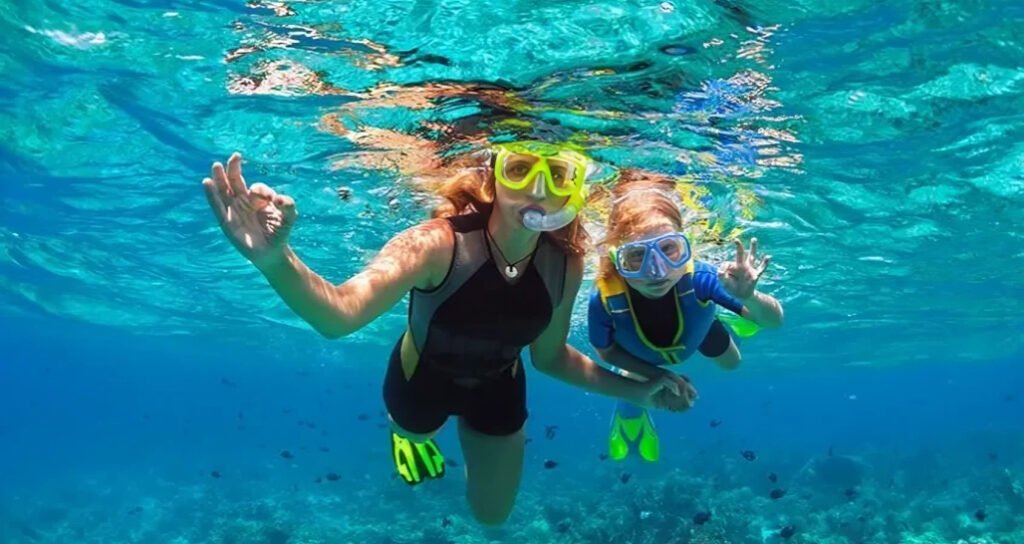
Yes, many turtle-snorkelling trips in Oman are suitable for beginners, and people who are not strong swimmers may still be able to take part with appropriate flotation support and crew assistance.
However, every guest should be realistic about their swimming ability, confidence in open water and the conditions on the day. A life jacket provides buoyancy, but it does not remove the effects of waves, currents or nervousness in the sea.
Do You Need Previous Snorkelling Experience?
No previous snorkelling experience is normally required for a recreational trip. Many travellers try snorkelling for the first time while visiting Oman.
Before entering the water, take time to understand how the mask, snorkel and flotation equipment work. If breathing through a snorkel feels unfamiliar, practise while holding the side or ladder of the boat before moving farther away.
Most importantly, tell the crew if this is your first time. They can give you more appropriate guidance than if they assume you are already comfortable in open water.
What If You Cannot Swim?
Being a non-swimmer does not automatically mean you cannot join the boat trip, but entering the water requires more caution.
Tell the operator and crew about your swimming ability before the snorkelling session begins. Use a correctly fitted life jacket or flotation aid, remain close to the crew or boat and avoid moving into areas where you do not feel in control.
If the water feels too rough or you become uncomfortable, there is no reason to force yourself to continue. Returning to the boat — or choosing not to enter the water at all — is always a sensible option.
Is Turtle Snorkelling Suitable for Children?
Children can often take part in snorkelling trips, but suitability depends on their age, confidence in the water, sea conditions and the individual operator’s rules.
Children should use correctly fitting flotation equipment and remain under close adult supervision. Equipment designed for adults may not provide the correct fit for a very young child, so parents should confirm available sizes with the operator before travelling.
A child who is nervous around deep water should not be pressured to snorkel simply because the rest of the group is entering the sea. Enjoying the boat trip without entering the water can still be the better choice.
What If You Feel Nervous in Open Water?
Feeling nervous when entering the sea for the first time is common. Start slowly rather than immediately trying to swim away from the boat.
- Start close to the boat or ladder.
- Spend a moment floating before trying to swim.
- Take slow, steady breaths through the snorkel.
- Stay near the guide or a confident member of your group.
- Signal the crew immediately if you feel uncomfortable.
- Return to the boat whenever you want.
Who Can Usually Take Part?
No previous snorkelling experience is normally needed, but listen to the briefing and tell the crew it is your first time.
Use flotation equipment, stay close to assistance and only enter the water when conditions and your confidence allow.
Check the operator’s policy and make sure correctly fitting flotation equipment and close supervision are available.
How to Snorkel Responsibly Around Sea Turtles
The best turtle encounter is one that does not change the animal’s behaviour. If you see a sea turtle while snorkelling in Oman, slow down, give it space and let the turtle decide whether to remain nearby or move away.
This is especially important in protected marine areas such as the Daymaniyat Islands Nature Reserve, where visitors share the water with turtles, coral and many other forms of marine life.
What to Do When You See a Turtle
You do not need an exact distance measurement to behave responsibly. The principle is simple: observe without interfering.
-
01
Do Not Touch the Turtle
Keep your hands to yourself even if a turtle swims very close. Never hold, grab, ride or attempt to make physical contact with a wild sea turtle.
-
02
Do Not Chase It for a Photo
If the turtle turns away or begins swimming elsewhere, let it go. Following closely for photographs or video can turn a calm wildlife sighting into a stressful interaction.
-
03
Leave Space for It to Move and Surface
Avoid surrounding a turtle or positioning yourself directly in front of it. Keep its route through the water open, including access to the surface.
-
04
Never Feed Marine Wildlife
Food should not be used to attract turtles, fish or other animals towards snorkellers. A genuine wildlife encounter should happen because the animal naturally enters the area.
-
05
Keep Your Fins Away From Coral
Watch where your fins are moving, particularly in shallower reef areas. Do not stand on, kick, collect or deliberately damage coral or other marine life.
-
06
Leave Nothing Behind
Bring rubbish, food packaging and personal items back to the boat. Marine reserves should look the same when you leave as they did when you arrived.
Protect the Whole Marine Environment
Responsible turtle snorkelling is also responsible reef snorkelling. Coral and other marine organisms should be observed without being collected, moved or damaged.
Good buoyancy control helps. If you need to adjust your mask or rest, use your flotation support or return to the boat rather than standing on coral or trying to hold onto the reef.
What About Turtles on Nesting Beaches?
Encountering a turtle on a nesting beach is different from seeing one underwater. At organised turtle-viewing locations such as Ras Al Jinz, visitors should follow the instructions of the reserve and its guides.
- Do not touch or interfere with nesting turtles.
- Do not touch, collect or move turtle eggs.
- Do not disturb nests or hatchlings.
- Follow local instructions about movement, lighting and photography.
What to Bring for Turtle Snorkelling in Oman
You do not need a large amount of equipment for a typical organised snorkelling trip in Oman, but a few well-chosen items can make several hours on the boat much more comfortable.
What is already provided varies between operators, so check your booking details before packing. In particular, confirm whether snorkelling equipment, flotation aids, towels, food and drinking water are included.
Essentials and Useful Extras
Keep your bag small and prioritise things that protect you from the sun, salt water and several hours away from the marina.
Practical Essentials
-
Swimwear Wearing it before departure makes getting ready on the boat easier.
-
Towel Bring one unless your operator has specifically confirmed that towels are supplied.
-
Sun protection A hat, sunglasses and suitable sunscreen are useful during exposed time on the boat.
-
Dry change of clothes Useful for the return journey after spending time in salt water.
-
Personal medication Carry anything you may reasonably need while away from shore.
Useful Extras
-
Waterproof phone pouch Helpful for keeping a phone and small personal items protected from spray.
-
Small dry bag A practical way to keep clothing, electronics and valuables together on the boat.
-
Reusable water bottle Useful if you prefer your own bottle, although first check what drinks your trip already includes.
-
Your own snorkelling mask Not essential, but experienced snorkellers may prefer a mask they already know fits comfortably.
-
Underwater camera Fine for recording the experience, as long as getting the shot never means chasing or blocking wildlife.
What Does Your Operator Provide?
What Footwear Should You Wear?
For a mainly boat-based snorkelling trip, simple sandals, flip-flops or other easy-to-remove footwear are usually more practical than heavy shoes.
If your itinerary includes seasonal island or beach access, ask your operator whether different footwear would be useful for that particular trip.
What If You Get Seasick?
If you already know that small boats make you uncomfortable, prepare before departure rather than waiting until you feel unwell at sea. Choose a light meal, stay hydrated and tell the crew if you begin to feel unwell.
If you are considering motion-sickness medication, follow the product instructions and seek advice from a pharmacist or healthcare professional if you are unsure whether it is suitable for you.
What Should You Leave Behind?
There is usually little reason to bring large bags or unnecessary valuables onto a snorkelling boat. Space can be limited, and anything loose near the water has the potential to become wet or fall overboard.
- Large amounts of luggage
- Unnecessary jewellery or valuables
- Loose items that can easily fall overboard
- Food intended for feeding turtles, fish or other wildlife
Frequently Asked Questions About Turtles in Oman
These are some of the most common questions travellers ask when planning turtle snorkelling, Daymaniyat Islands trips and turtle-watching experiences elsewhere in Oman.
Can you snorkel with turtles in Oman?
Yes. Sea turtles live in Omani waters and may be encountered while snorkelling in suitable marine habitats. The Daymaniyat Islands near Muscat are one of the most practical options, although turtle sightings are never guaranteed.
Where is the best place to snorkel with turtles near Muscat?
The Daymaniyat Islands are one of the strongest options for turtle snorkelling near Muscat because they combine boat access with coral reefs, marine life and the possibility of seeing turtles in the water.
Are turtles guaranteed at the Daymaniyat Islands?
No. Turtles are part of the Daymaniyat marine environment, but they are wild animals and their movements cannot be predicted for a particular trip. Choose the islands for the complete reef and marine experience rather than expecting a guaranteed sighting.
What is the best time to see turtles in Oman?
It depends on the experience. Boat-based snorkelling at the Daymaniyat Islands can take place throughout the year when conditions allow, while the strongest green-turtle nesting period around Ras Al Jinz and Ras Al Hadd is generally from June to September.
Can you snorkel with turtles at Ras Al Jinz?
Ras Al Jinz is primarily known for guided observation of turtles nesting on the beach rather than for snorkelling with turtles. If your main goal is an in-water turtle encounter, a marine destination such as the Daymaniyat Islands is a more suitable option.
What turtle species are found in Oman?
Five sea turtle species have been recorded in Omani waters: green, loggerhead, hawksbill, olive ridley and leatherback turtles. Green, loggerhead, hawksbill and olive ridley turtles nest in Oman, while leatherbacks are irregular visitors.
Can non-swimmers join a turtle-snorkelling trip?
Often, yes. Non-swimmers may be able to enter the water using suitable flotation equipment and crew support, but they should tell the operator about their ability beforehand and only enter when the conditions and their confidence allow.
Can children snorkel with turtles in Oman?
Children can often join snorkelling trips, but suitability depends on their age, confidence in the water, sea conditions and the operator’s rules. Correctly fitting flotation equipment and close adult supervision are especially important.
Can you touch sea turtles while snorkelling?
You should not touch, grab, chase or block a sea turtle. Observe it calmly, leave its route through the water open and let the animal decide whether to remain nearby or swim away.
Can you visit the Daymaniyat Islands between May and October?
Yes. Boat trips, swimming and snorkelling can continue during this period, but visitors cannot land on the islands or use the beaches from 1 May to 31 October. Seasonal landing may be possible again from 1 November to 30 April, subject to reserve rules and conditions.
Planning a Daymaniyat Islands trip?
Browse our current snorkelling, diving and private boat trips, or message our team if you have a question about your travel dates.